$ (USD)
English


Berlin is one of the largest cities in Europe. It wasn't until the 13th century AD that large settlements appeared here. It was two separate cities, Cologne and Berlin, that merged into one. Germany's capital kept one of the cities' names, and Cologne became Neukölln.
Since it was founded, the city has seen its fair share of booms and busts. Berlin was most drastically changed during and after World War II. Not only were many historic and cultural buildings destroyed, but shortly after the war, Berlin was divided into two parts by the Berlin Wall. Today it's a thriving area that's popular with tourists. Many buildings have been restored and opened to the public.
Reichstag is home to one of the world's most famous parliaments. At the end of the 19th century, it was the seat of the German Empire's parliament, and then of the Weimar Republic's.
Construction on the monumental building began in 1884, and it was finished in 1894. It was a hospital, a maternity hospital, a light bulb factory and a maternity hospital during the Second World War.

The zoo covers 30 hectares and has been around for 150 years. König Friedrich Wilhelm IV of Prussia founded the Berlin Zoo in the 19th century. There are currently about 1,550 different species of animals there.
You have to walk through the Elephantheron to get into the zoo. Here's the name of the huge Chinese arch at the park's entrance. It's surrounded by two elephants carrying huge columns. The arch is topped with a dome.
Brandenburg Gate was once the main entrance to the city. Then it became part of the Berlin Wall that divided the city. The only piece of the historic structure remains today. You can come here during the daytime and at night. Thanks to an interestingly conceived illumination, the gate looks especially awesome at night.
Built by two architects brothers in the late 19th and early 20th century, the cathedral is a huge building. The cathedral was originally designed as a family church and tomb for the Hohenzollerns.
In its beauty of architectural design, the building is impressive and fascinating. In front of the cathedral is another interesting monument – the rounded and sharp angular forms of a fountain.

There are several places in Berlin called Tiergarten. It's the name of a neighborhood and two parks. Germany's largest park is the Großer Tiergarten. There are 210 hectares of it.
It used to be a hunting ground, but now it's a nice place to walk around and relax. Make sure you check out the Berlin Zoo and the Memorial to Soviet Soldiers Who Died in WWII while you're there.
There's an open-air art gallery in southeastern Berlin. The colorful works hide a structure that is both a symbol of division and unification – the Berlin Wall. The first paintings on it appeared in the 90s of the XX century.
Today, more than 1,300 meters of the wall are covered with paintings in a variety of styles. You can either walk the walls alone or hire a guide to tell you about the paintings.
Berlin was divided for 28 years by the Berlin Wall. There's only a bit more than 150 kilometers left, including the Brandenburg Gate. There are lots of souvenir shops near the monument, so you can buy a piece of the wall.
The Berlin Wall was built in the mid-twentieth century and was destroyed by residents of East and West Berlin in 1989. The circumstances of these events can be learned from a guided tour, which can be booked on site.
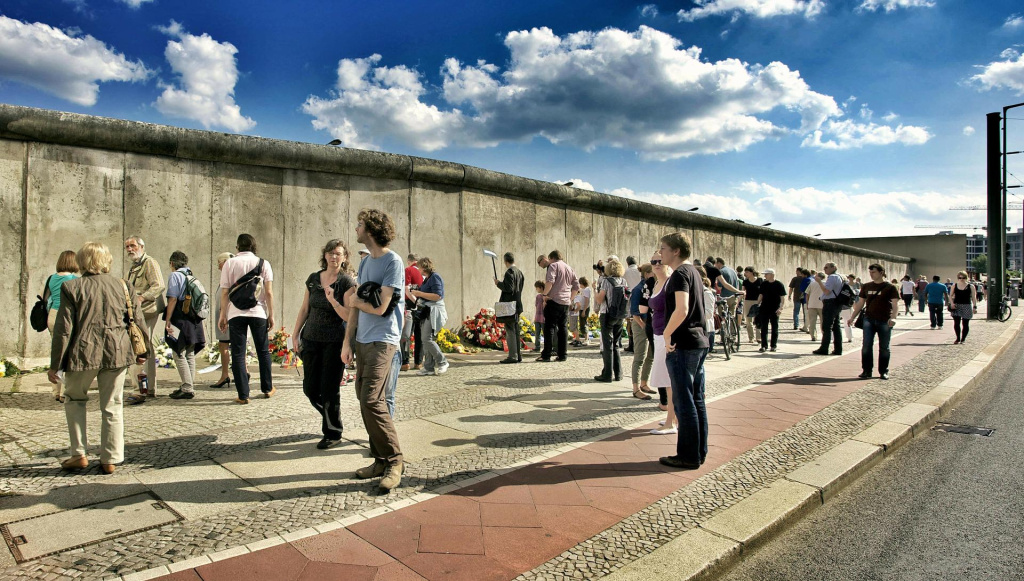
There are numerous museums on this island, which house exhibits from different eras: from ancient Egypt to the present day. This place was designated a UNESCO World Heritage Site at the end of the 20th century.
A unique feature of the island is that it is a single structure made up of individual buildings. Working on the project in different years with the greatest architects of the time. There are now so many collections that additional buildings are needed.
Anyone who loves architecture and archaeology should check out the Pergamonmuseum. There are reconstructions of ancient Rome, Greece, and the Middle East. There are three parts of the Pergamonmuseum: the ancient collection, the pre-Asian section, and the Islamic art section.
There's a huge tower topped by a giant ball with spires that's popular with tourists. It's more than 350 metres high. There's an observation deck at the top. In the 1960s, after the Berlin Wall fell, the TV Tower building was finished.
Just in time for the 20th anniversary of the GDR, the building was put into operation. It's now a symbol of German unity that everyone flocks to every year.

Wagener, the famous banker at the time, gave the King of Prussia 250 paintings in 1861. Originally, they were supposed to be at the Academy of Art, but then they decided to build a separate building. A plan was born for the place that's now called the Old National Gallery. It houses a collection of art from the 19th century that's considered the largest in Europe.
Built in the 19th century, «Red» Town Hall was named for the color of the bricks that clad its façade. It houses the Berlin mayor's office. Since the town hall functions for its main purpose, not all rooms are open to tourists.
There are also times when tourists aren't allowed in for security reasons. We recommend taking a tour of the town hall, where you'll learn all the interesting stories.
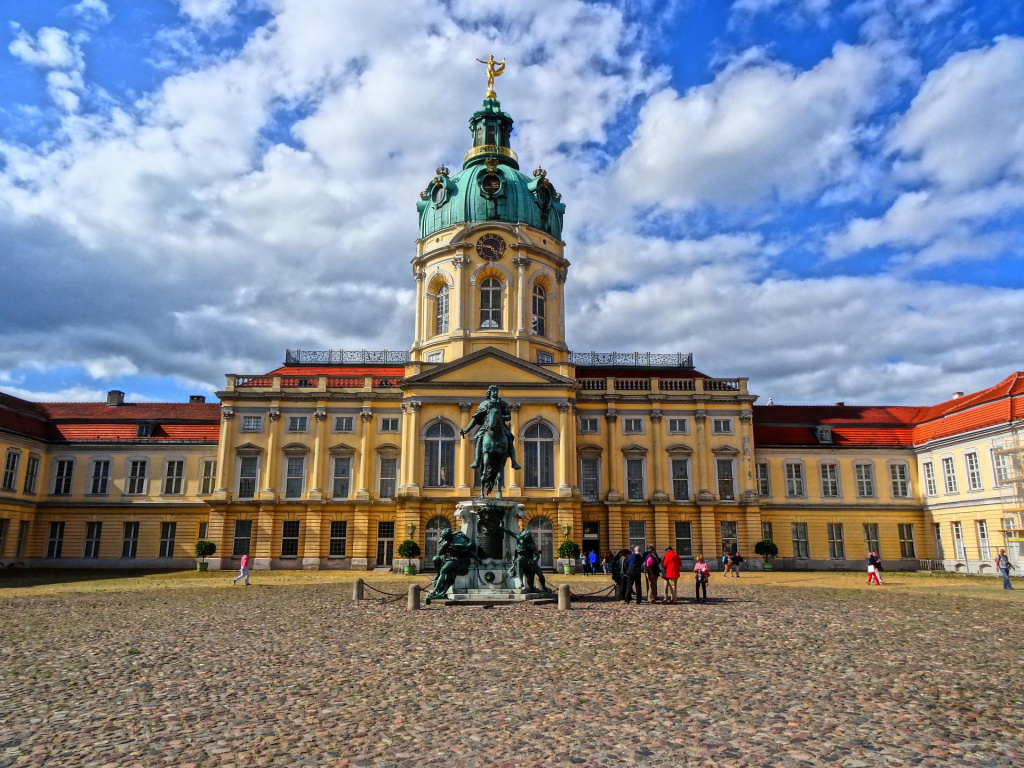
Charlottenburg is one of the biggest palace ensembles in the city. Seven generations of rulers lived there: from the Electors of Brandenburg to the Hohenzollerns. Castle construction started in the 17th century.
Every family that settled in Charlottenburg since then has added a little bit to the architecture. The castle was badly damaged during the Second World War and was later restored. You can visit it now.
The name of this street means «under the lime trees». The street was built by Friedrich Wilheim, who wanted to improve the road he took to go hunting. You can walk on the street while seeing many of Berlin's top sights, like the Brandenburg Gate and the Berlin State Opera House.
Many people still refer to this building by its old name – the Royal Court Opera. The opera was at the height of its popularity at the start of the century. During World War II, the building was almost completely destroyed. The opera is open again after the reconstruction. It's interesting that the position of chief ballet master has been taken by a Russian dancer.

This memorial is a permanent remembrance of the Holocaust, the brutal murder of Jews by the Nazis during World War II. On the territory of the memorial, the gray slabs are arranged in rows. All of them are different heights which reminds us that there were people of different ages among the Nazi victims.
In the south-east of the city, you'll find this cozy park. It often hosts festivals. It's a popular spot for tourists and locals.
There are a lot of interesting things to see in the park. There's also a puppet theater and an observatory. In addition, there's a memorial monument to Soviet soldiers who died during World War II.
Once upon a time, there was a hospital named after St. George, then the square had his name. King's Square and the adjacent gate were renamed at the beginning of the 18th century to commemorate the coronation of Frederick the First.
It got its last name – Alexander Square – after the Russian tsar visited the city in the XIX century. A lot of the most famous shopping houses were built here in the 20th century, and some of them have been preserved in their original form to this day.

A few months after the Berlin Wall went up, Checkpoint Charlie was built between the west and east sides of the city. Checkpoint Charlie is a symbol of the Cold War between the USSR and the United States today.
It's right on the street. The historic landmark contrasts with the modern cafes and shops that grew up around it, reminiscent of recent military events.
The exhibits in the Berlin Picture Gallery date from the XIII – XVIII centuries. There are exhibitions devoted to other time periods, but they're a lot smaller.
There's a minimalist design to make sure visitors don't get distracted when they're looking at the art. There are works by Schonauer, Cranach, and Italian geniuses like Botticelli, Bronzino, and Carracci.
Bellevue Palace became the residence of the German president in the 21st century. Located right in the heart of Berlin, it's a gorgeous palace complex. Ferdinand of Prussia built the palace in the late 18th century.
Bellevue was heavily modified during World War II. Later, the Nazis used it as a dignitary's guesthouse. It was reconstructed after the war.

A part of the Free University of Berlin is the Berlin Botanical Garden. It's very popular among students. It's one of Europe's largest botanical gardens. The collection of plants, which includes some rare ones, is about twenty-two thousand units.
The synagogue was built in the Mitte district in the second half of the 19th century. Until recently, it was the main synagogue of the local Jewish community. The building is in the Eastern Moorish style. And the opening was just as gorgeous.
It was attended by Otto von Bismarck, then Prussian president. The synagogue building was almost completely destroyed during the Second World War. It was rebuilt and is now open to tourists.
Berlin's most famous square, also the biggest tourist attraction. No sightseeing tour is complete without a trip to Gendarmenmarkt. In Berlin, there are two cathedrals: the German and the French.
Additionally, there's the Konzerthaus, where a variety of concerts are held. A monument honors the German poet, philosopher, and playwright Schiller.

The memorial church is now just a faint echo of its former glory. This building was built as a monument to the first Kaiser. The Memorial Church held Protestant services when it was built. The monument was badly damaged during World War II.
From the once magnificent multi-tower structure, only two towers remain: a central tower and a side tower. Mosaics and paintings adorn the walls and ceiling of the church, too. Within the church is a small museum where you can see old photos of the monument and check out the layout in detail.
A famous museum with wax figures that are hard to tell apart from real people. Here's your chance to get a selfie with your idol! One thing to remember is that you can be photographed with all figures except one.
Hitler is located in a place where you can't take pictures or make videos. Madame Tussaud's is famous for the fact that in each city, the exhibitions are set up so that while people look at the figures, they learn about the history of the country they're in.
St. Mary's Church is one of the oldest religious buildings in Berlin. The church originally held Catholic services, but now it's an important part of the Evangelical Church. The foundation is made of granite. The walls are made of brick.
The Red Town Hall is next to the church, made of nearly the same red brick. This church has survived several fires and the war. This is the reconstruction. Its interior has one of the oldest frescoes, «The Dance of Death,» which dates back to 1484.

Potsdamer Platz is a symbol of a reunified and expanded Berlin. It was considered the cultural and political center of Berlin before World War II. The building itself and the surrounding buildings got destroyed.
After the fall of the Berlin Wall, the city center began to be rebuilt, including Potsdamer Platz. Currently, the area around the area is covered with office buildings and innovative architectural structures. This is a great place for green tech enthusiasts.
«Neptune» was built at the end of the 20th century. The project belonged to the famous sculptor Waldemar Otto. The fountain statue of Neptune is three and a half meters tall. It's bronze and green granite, whose colors blend really well with the water. There are benches near the fountain, so town residents can relax under the murmur of water.
Spandau Citadel dates back to the Renaissance. This castle was built in the second half of the 16th century. There was an earlier fortress in the same place. Although it was actively used by the Nazis during World War II, the citadel is very well preserved to this day.
In those years, poison gas was being produced on the citadel's grounds. The garrison stationed there surrendered without resistance, saving the fortress from destruction. Today there are excursions for everyone.