$ (USD)
English


Budapest is really the city of a thousand faces. You can't see everything in a short weekend! There's more to Budapest than just seeing all the sights and charms – the city is spread over a wide area and it's worth taking the time to see its geographic diversity – from the hills of Buda to Margaret Island to Pest's bustling center.
And we'll tell you about the top 25 attractions in Budapest.
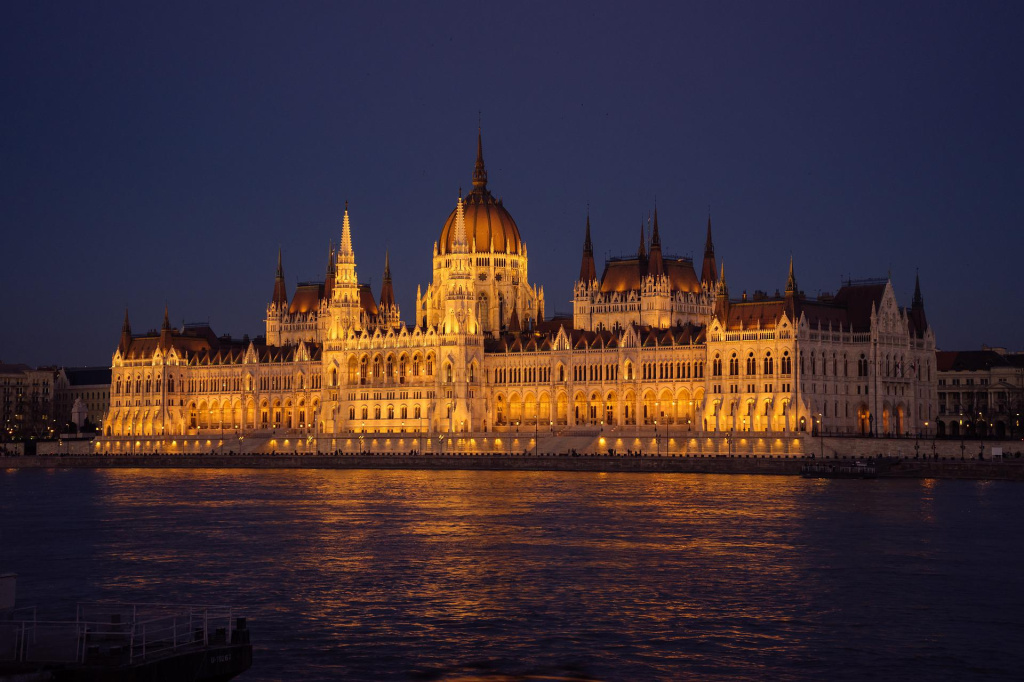
From foundation to roofline, the entire Parliament is filled with political and historical messages. Look at its shape. The central dome symbolizes a unified parliament. Back when Hungary had a bicameral national assembly, this was where both chambers met.
The building of the Hungarian National Assembly took 17 years to build. It was built with Hungarian materials. Even the craftsmen and workers involved in building the parliament building came from Hungary.
In the late 19th century, Buda Castle was almost completely destroyed by revolutionaries after it survived the Tatar-Mongol invasion. Rebuilding the building took almost 40 years of painstaking work from the best craftsmen.
Then the war happened. The palace was attacked. Again, it was resurrected by talented architects like a phoenix. Buda Fortress, where the Palace is located, is more like a city. It will take you more than a day to see everything!
The oldest market in the city is still considered to be the biggest. Here, you can find pretty much anything: from fresh produce to handicrafts. It's called Najarnok by the locals.
The building dates back to the late 19th century. Interesting thing is, this place isn't so popular with tourists as it is with locals. You can buy all kinds of stuff there. Excellent prices and fresh stuff here, some of which you can't find anywhere else.
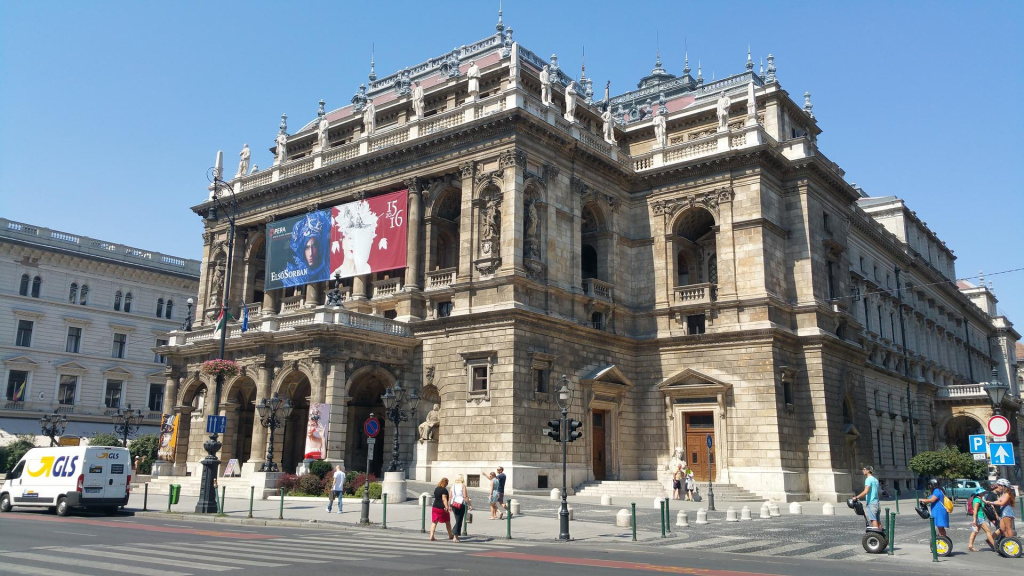
Built in neo-Renaissance style, the Hungarian Opera House is just as beautiful as the operas of the world! As far as sound quality goes, it's third after Milan and Paris. The greatest opera classics are performed by top opera singers.
There's an atmosphere of luxury and tranquility in the hall, so nothing can interfere with your enjoyment. There are painted walls and painted ceilings – even if you're not into opera, but love architecture and painting, this tour won't disappoint.
There's a frame around the building that says "Terror". You can't walk past it. In the late 19th century, it was a prison where opposition to the regime was kept briefly. You'll learn about the torture of prisoners and the propaganda.
On one wall of the yard, there are pictures of former prisoners, a memorial to all those who died in the torture cells. The tour is worth going on at least once, even if people have mixed feelings afterward.
It's a fairy tale castle that houses a number of exhibits showing different aspects of human life. For instance, here you can find out about hunting traditions, or how Hungarian wine is made. The second floor has exhibitions on Hungarian history and nature. There are some exhibitions in Hungarian only, but many of them are in English too.
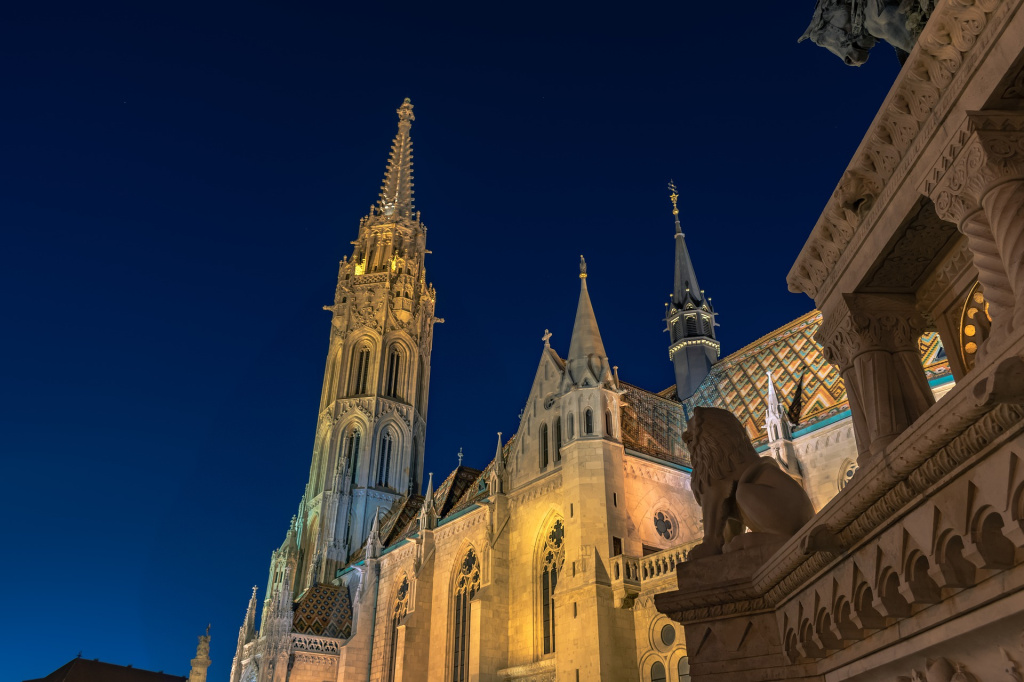
Built in memory of King Matyas in the 15th century, this church has survived wars. In the 19th century, the church's enchanting stained-glass windows and ornate patterns on the walls were restored under the direction of the country's top architects. The church building houses a small museum devoted to the life of the church and the king.
More than 50 years went into building the biggest temple in the city. The magnificent structure was improved by three different architects in different periods. The temple is dedicated to St. Stephen, who was the first king of Hungary.
The king's right hand was rumored to be buried in a golden tomb (shrine). The shrine is right by the altar, and every year on St. Stephen's Day the faithful make a procession with their relic.
The Great Synagogue is the biggest in Europe. It can hold up to 3,000 people. It's rare to find excursions in synagogues where women are allowed. But the Great Synagogue welcomes everyone. We have multilingual guides who talk about the history and the religion. There's a Jewish museum in the courtyard that anyone can visit.
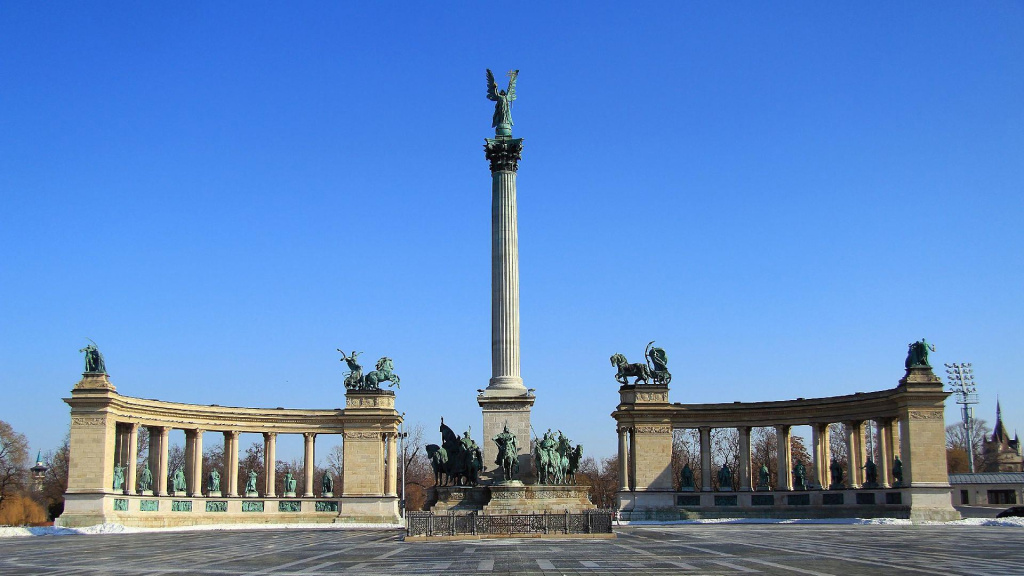
As you walk along Andrassy Avenue, you will invariably come to one of the city's key squares. A UNESCO World Heritage Site, Heroes' Square proudly displays its title. A majestic memorial to the Millennium was erected here at the beginning of the 20th century, depicting the Archangel Gabriel and the seven Hungarian leaders. There is also a memorial plaque here dedicated to the heroes of Hungary.
There's a square at the center of the city, next to the Parliament building and the Basilica of St. Istvan. There are a lot of meetings and demonstrations there. Originally a prison, the square was built in the 19th century. In a certain period of time, this area was a hub for financial corporations.
In the square are banks, chambers of commerce, and the Palace of the Stock Exchange. You feel a special spirit of freedom and strength walking around the square, among the World War I memorials and monuments.
The square is named after a Hungarian national hero who played an important role in the 1848 revolution. Lajos Kossuth was able to oust the country's president. Despite the failure of the revolution, the hero won the hearts of the people.
As the sun sets, lovers of coziness come here to stroll along the cobblestone paths while enjoying the scent of roses. Hungarian Parliament Building, Ethnographic Museum and 1956 Memorial Museum are nearby.
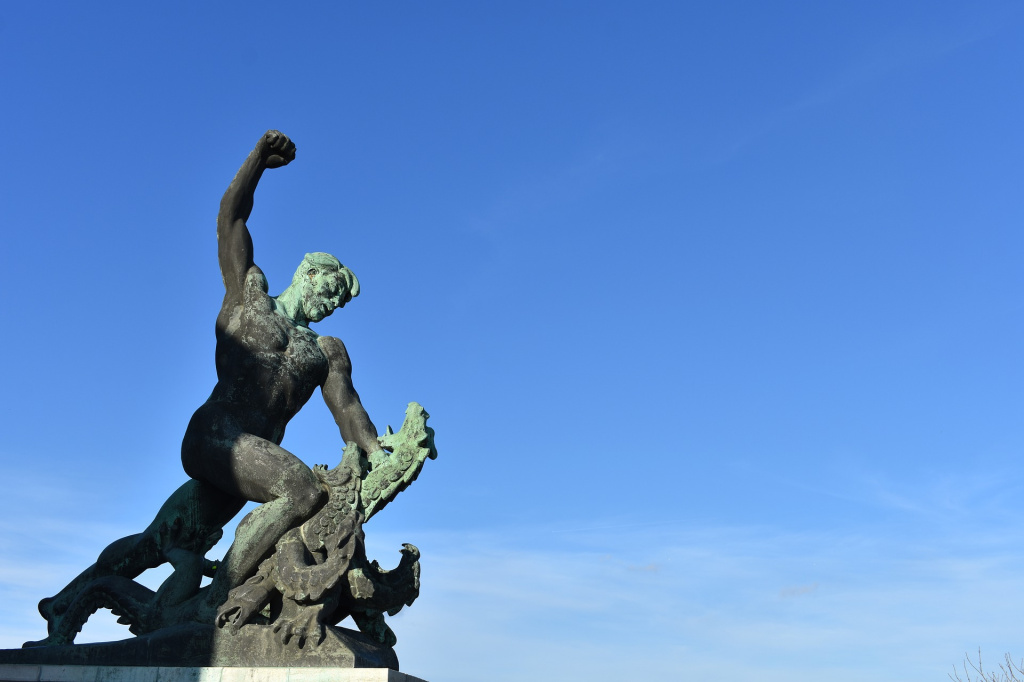
There is a monument to the fighters who sacrificed their lives for the prosperity of their people on Mount Gellert. 3 figures. A bronze girl symbolizes Hungary holding a palm branch in the river, praising the country's peace. A man defeats a dragon and a man holds a torch to symbolize freedom from oppression stand next to her.
Two years after the idea for the memorial was born, the statue was erected in 1947. It's considered Budapest's tallest monument. It stands over 40 meters tall. There's an observation deck nearby. Also, you can easily get to the Gellert Monument and the Philosophical Garden from here.
Many nations were devastated by World War II, including Hungary. Sixty cast iron shoes worn by the average citizen in the 1940s are lined up neatly on the Danube promenade. Brutal memorial for the Holocaust victims who were shot on the riverbank by members of the Nazi party "Crossed Arrows".
Nazis took the shoes off the victims and took them for themselves or sold them. Women's shoes, men's shoes, children's sandals – the river took them all. They come here to remember the terrible years and the innocent victims.
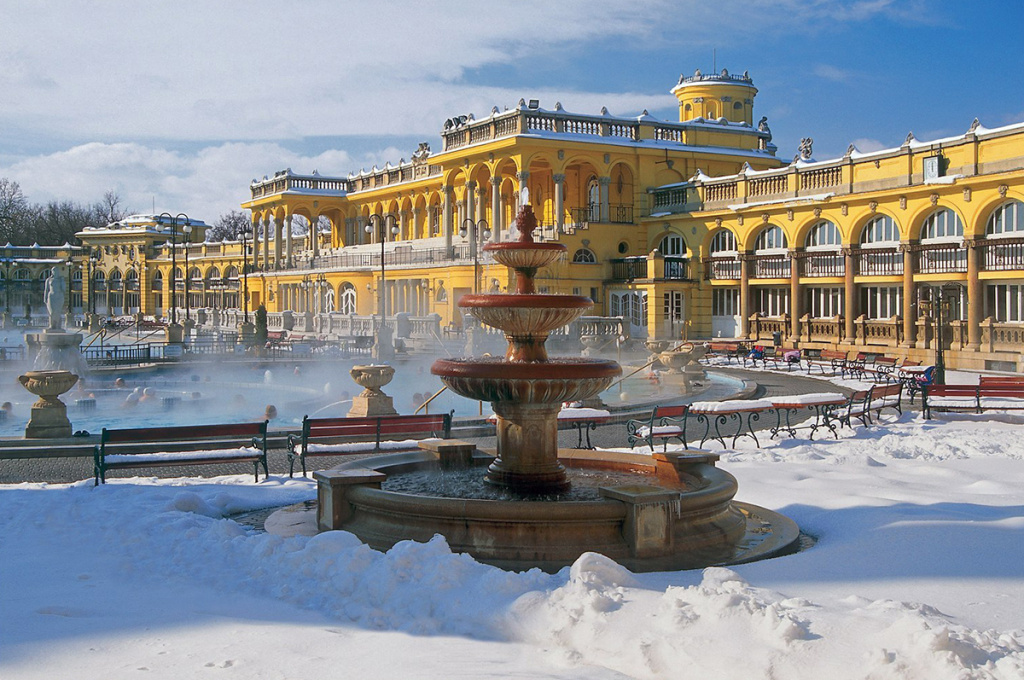
Known as the largest balneological complex in Europe, Széchenyi Baths are located in Budapest, Hungary. Lots of people come here any time of the year. Some are attracted by the beauty of the architecture: the exquisite moldings, carved columns, mosaics, etc. Some people come here for the healing properties, others for some untested services.
A building was built on the site of the mineral water source in the late 19th century. It wasn't until the 20th century that the bathhouse doors opened to the public. Later, the premises were rebuilt so the baths could work in winter.
Baths with hot mineral water are on Mount Gellert, not far from the Statue of Liberty. According to legend, the spring was discovered by an unknown monk who lived in a cave just above it. Unlike other baths in Budapest, the Gelert baths have mud with unique healing properties.
The place got its second name – Mud Bath – due to this feature. You can choose from 13 pools, including open-air pools with different temperatures. There are separate men's and women's pools.
Palatinus is more than a spa. As well as the therapeutic pools and saunas, they built an entertainment area. The huge area has a water park, restaurants for every taste, playgrounds for active kids. In the baths of Palatinus, there's a wellness area too. There are plenty of medical treatments to choose from. Both tourists and locals love it. Families come here with kids, who have separate play areas and swimming pools.
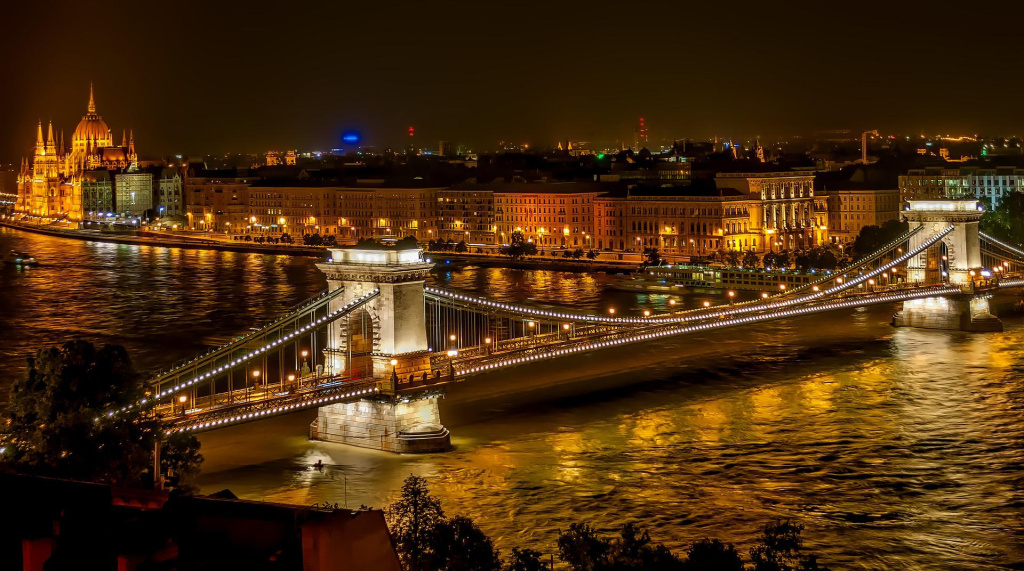
The bridge links Buda and Pest, the two parts of the city. Just after the revolution in Hungary, it was reconstructed in the 19th century. When it was built, it was one of the world's longest bridges! It's more than 200 feet long.
Moreover, the technical and structural solutions were not just bold, they were innovative. The bridge's name comes from a famous Hungarian politician who sponsored its construction. It's a symbol of the unity of the city, it's the two banks coming together.
There are many names for the Liberty Bridge: Franz Josef Bridge, Customs Bridge. The plan for its construction was born in the 19th century, when it became clear that the existing bridges weren't enough for people to get around.
This structure is designed with iron beams, which were still considered new at the time. A Nazi retreating from the city blew up the bridge, hence the name "Freedom Bridge.". When the war ended, Soviet citizens and the people of Hungary restored it to almost its original state.
The Archaeological Museum is right under the open sky. You can also see separate exhibitions in different buildings. The museum is built on land where a Roman fortress once stood, and has grown over the years to the size of a city. Apparently, the city was divided into two parts, one of which was a military area.
An unknown resident of Budapest who decided to dig a cellar at home accidentally stumbled across these ancient buildings at the end of the 18th century. While he was working, he stumbled upon the remains of an ancient heating system. As soon as the main excavations were completed at the end of the XIX century, the area became a museum. Construction on the exhibition areas began then.
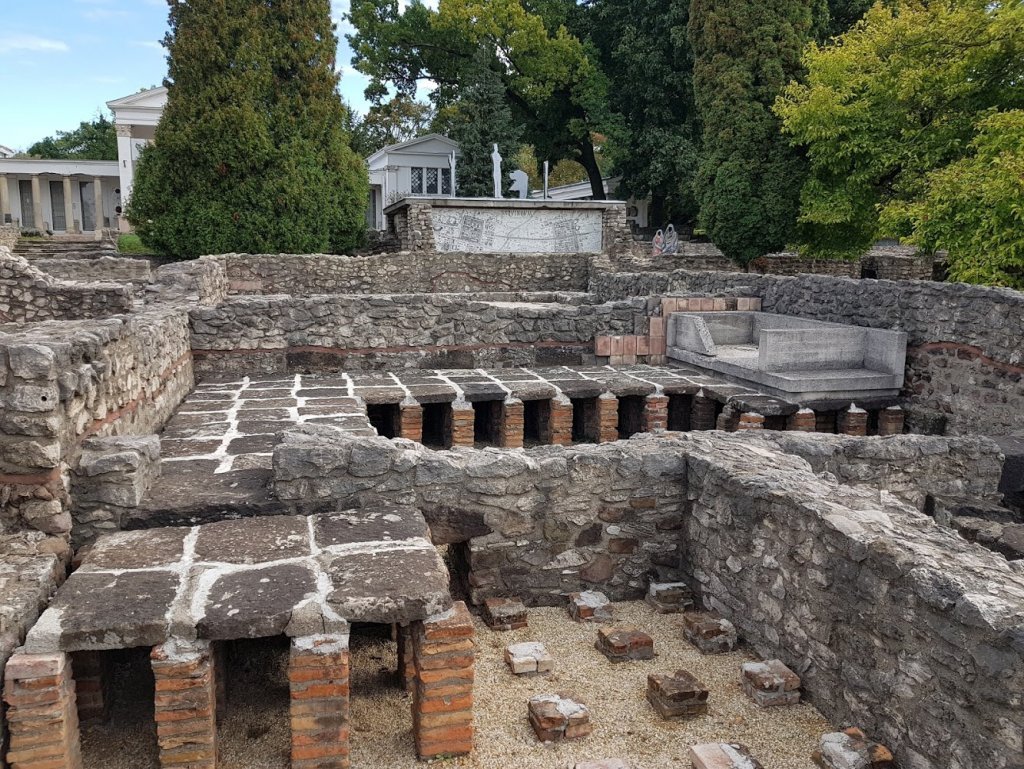
Photo: topgid.net
Those interested in history and art should definitely visit the National Museum. Objects tell how the culture of music, writing, and painting developed on the territory of the country. This is also where the portraits of members of the royal dynasty are kept, as well as the instruments Beethoven, Liszt, and Mozart owned.
The Central History Museum is in the Royal Palace in Buda. A huge collection of museums spans the city's history, from ancient times to the present. The museum is worth a whole day to explore.
From the time of Matyas Corvinus, you can see elements of the royal family's ceremonial hall. There's also a chapel built in 1380. What draws tourists to the museum is the spirit of history and the atmosphere of change.
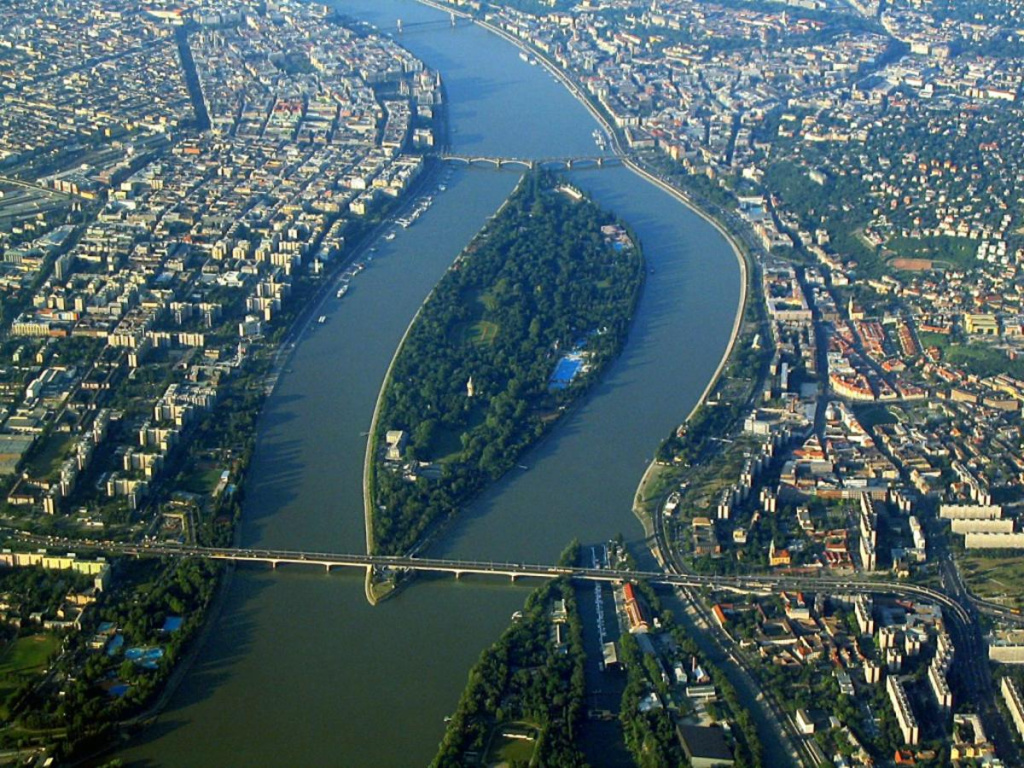
The island is located almost in the center of the city, but the atmosphere here is surprising quiet. If you want to relax in quiet, surrounded by shady trees and graceful bushes, then this place is for you.
Mary is derived from the name of Saint Margaret, who was abbess of a Dominican monastery in the 13th century. Margaret was born into royalty. She was sent to the monastery by her father to pray against the Mongol invasion.
On the site where the monastery once stood, a park was developed in the nineteenth century. Lots of different plants grew there. In the park, there used to be more than 1000 kinds of roses.
Budapest's Elysian Fields are named after this avenue. Its main avenue has even been listed on UNESCO's world heritage list. The street is home to the city's most famous buildings: museums, universities, and the opera.
Andrássy Avenue runs between Ferenc Deák Square and Heroes' Square. Formerly, it was considered one of the most beautiful streets in Europe. The Royal Street was built to relieve the pressure on the Royal Street in the 19th century. During construction, it was decided to build houses for the Hungarian aristocracy on the avenue.
The first pedestrian zone in the city's central part was established here in the 20th century. After a century, the cobblestone street became a major thoroughfare. Váci Street stretches for a kilometer and has lots of historical architecture. There are conventionally categorized sectors along the street.
You'll find cafes, restaurants, and a bunch of stores on the first floor. The apartments are on the second floor. A lively street leads to Thebes Square, where a fountain and several restaurants are located. A 4 star hotel is nearby, the Metcure Budapest City Center. On the street, there are lots of souvenir shops where you can find real treasures. Make sure you stock up on cash before you go.