$ (USD)
English


The history of ancient Rome began three thousand years ago on the hill of Aventine, which lies on the left bank of the Tiber River. Along with the eternal city, here begins one of the most powerful empires of all time, as well as the entirety of Western civilization. Think of how many cultural and historical monuments make the capital of Italy so appealing.
Tip: If you look through the famous keyhole on the gates of the Magistral Villa on the Aventine Hill, you can see three countries: the Vatican, Italy, and the State Anclave of the Order of Malta.
Rome's long been a major tourist destination. Each year, millions of tourists have to figure out the same thing – what to see first, when to go so as to see as many monuments as possible. Experienced tourists plan their itinerary in advance, beginners figure it out on the fly. But there are a few places you have to see first.
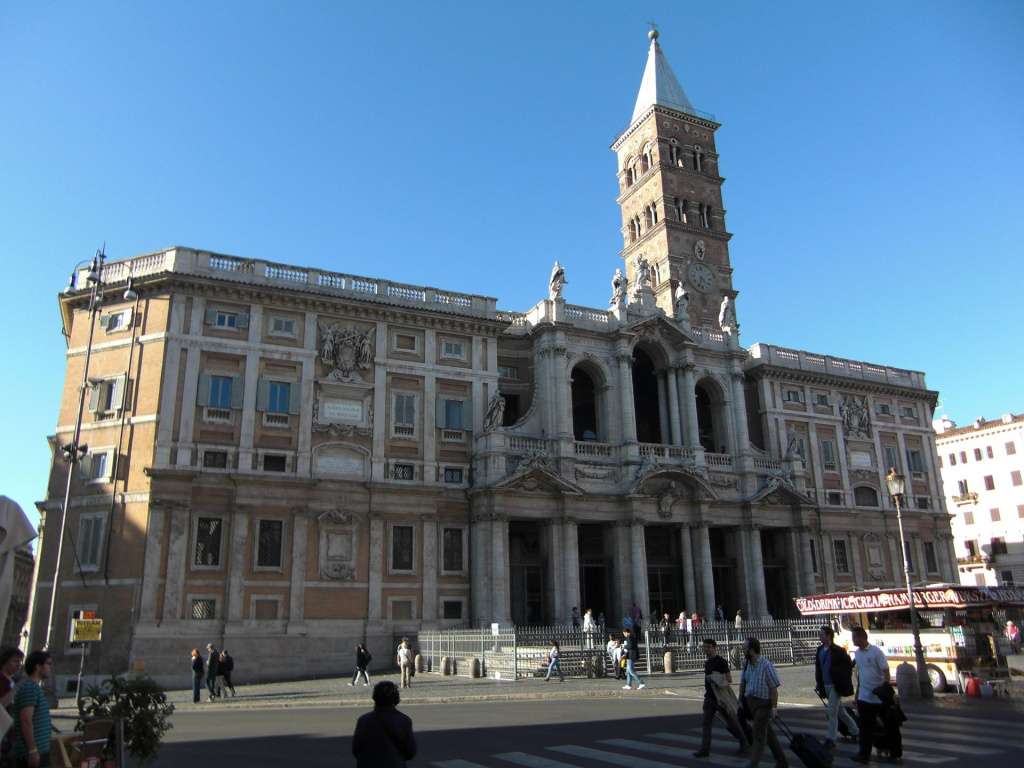
There's a legend that Bishop Liberius had a dream at the dawn of our era. During his dream, he saw the Virgin herself telling him to build a temple on the spot where the snow would fall in the morning. Despite it being August, there was some snow on top of Ekvilin Hill the next morning. The Church of Santa Maria Maggiore, one of Rome's main churches, was built here in 352 AD. This temple has a chapel called the Sistine Chapel.
On August 5, you can watch several thousand rose petals fall from under the dome of the basilica in Rome. Inside the church you'll find relics of Pope Pius V, Masonic symbols, the golden cradle of Jesus and many other religious relics.
Tip: It's free to visit the Basilica of Santa Maria Maggiore. And you can confess in any language you want.
The ancient amphitheater is Rome's calling card, just like the Bronze Horseman is for St. Petersburg or Big Ben is for London. Flavian amphitheater – built by order of the imperial dynasty in the 1st century AD – was originally called that. However, no one knows for sure where the name came from, which appeared in the Middle Ages.
An amphitheater was built on the site of an artificial lake that was backfilled. A huge ellipse of seating could hold about 55 thousand people. That was the real purpose of the Colosseum – to entertain the public. Hundreds of gladiators and animals died in the first performance here on the opening day. In addition to the military fights and the predator pummeling, sea battles happened here too. The wooden planks were removed for this. Through an engineering system, the passages and gladiator rooms under it were filled with water. By the way, it was in the Colosseum when the idea of multiple entrances and exits was first implemented.
A barbarian invasion destroyed the walls, and several earthquakes, including the biggest one in the middle of the 14th century, further destroyed them. In addition to these troubles, local residents stole stones from the amphitheater to build their houses – not just ordinary Romans, but also Pope Paul II and Cardinal Riario were there. Furthermore, Clement IX thought of putting a saltpeter factory in these ancient walls. It took until the 18th century for the dilapidated Colosseum to be restored. In 2007, the Colosseum was included in a list of the New Seven Wonders of the World, along with Machu Picchu in Peru, the Great Wall of China, and others.
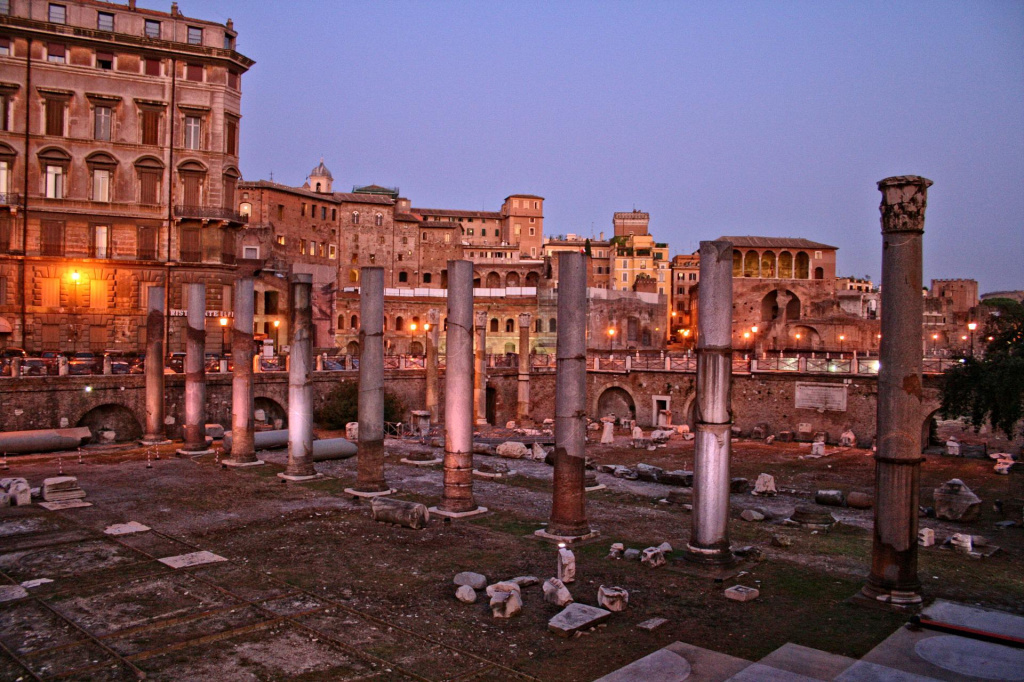
The oldest forum in the city dates back to the turn of the first and second centuries AD. That's the Roman Forum. The introduction of laws, the passing of verdicts, the appointing of officials, and the execution of trade deals all happened here. Today there's an archaeological site of 500 square meters that's protected by the state. You can walk around the forum for 40 minutes, but a more detailed tour might take 2 hours.
Tip: Visitors will need a great deal of imagination and patience in order to imagine how the ancient structures looked originally.
Eventually, the Roman Forum ran out of space and was expanded. A task was assigned to Julius Caesar. Construction took 150 years. They became known as the Imperial Forums and included:
The city center rapidly emptied out after the fall of the Great Roman Empire and began to deteriorate. It was used over the years as a quarry to build new temples, towers, and palaces.
The oldest Triumphal Arch dates back to 315 BC. It's made of marble. The rectangular building with three arched openings is 21 meters high, 26 meters wide, and 7 meters deep. During the Civil War, the Arch of Constantine served as a symbol of victory not over an external enemy, but over the people of his country.
For centuries, the Arch of Constantine served as a model for building these kinds of structures.
Tip: The arch and the beautiful medallions and bas-reliefs are free to see all day, because the city is open 24 hours a day.
The Roman authorities banned new burials on the territory of the city in the fifth century BC. That's when the Roman catacombs began. In the side corridors, bodies were buried in niches hollowed out in the walls. The martyrs' niches and saints' niches were decorated with arches.
Catacombs like those of St. Sebastian, St. Calliste, St. Agnes and St. Peter are the most famous. Most interesting are the catacombs of Domitilla and St. Calliste. There are more than 150 thousand graves in the former, which is almost 17 kilometers long. There's also a fresco called "Madonna with Child and the Four Magi" in these dungeons with relics of Nereus and Achilleas.
St. Callista's catacombs were a burial place for Christians and a place where pilgrims came to see the relics of martyrs and saints. Nearly 60 catacombs surround Rome's Eternal City, with over 700,000 burials.
In the Roman catacombs, the first Christians hid. They built first temples here, prayed, and held rituals. However, the catacombs still performed their original functions. The catacombs were forgotten when Constantine recognized Christianity. Dungeons weren't discovered until the second half of the 16th century.
Tip: Don't go into catacombs if you have diabetes, high blood pressure, claustrophobia, epilepsy, or heart disease. Families with young kids and pregnant women should exercise extreme caution too.
Thermae were called public baths in ancient Rome. Thermae of Diocletian are the largest and most famous. Built at the end of the III century AD, they had no analogues in size, technical equipment, or capacity. They could hold 3000 people at a time. Diocletian's Thermae was 13 hectares. It had 3 swimming pools and 3000 baths.
Statues, frescoes, even a fountain decorated the marble interior. There's the Temple of Santa Maria del Angeli, the National Museum, and the Church of San Bernardo alle Terme in the baths.
Tip: From seven in the morning to eight in the evening you can look at the remains of the ancient Roman baths.
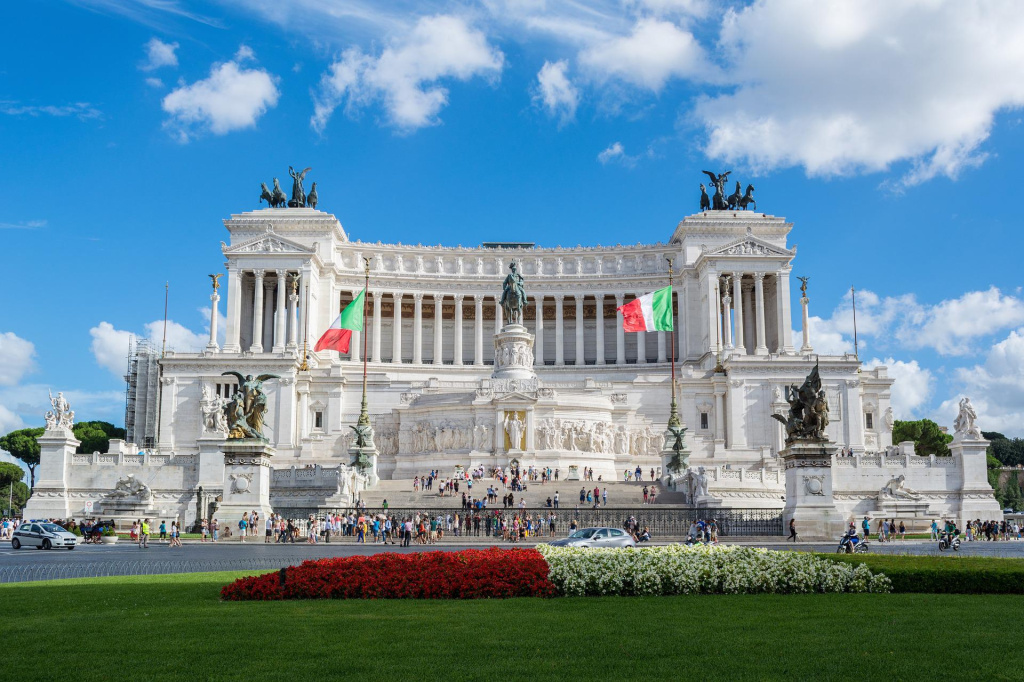
Almost 40 years went into building the architectural complex that includes the building with the colonnade and statue outside, the Renaissance Museum, the Tomb of the Unknown Soldier, and the Eternal Flame. This complex was built to honor King Victor Emmanuel II, who was the first to unite Italy.
One of the most ambitious projects of the XIX century, the monument commemorates the 50th anniversary of the unification of the state. The architect Giuseppe Sacconi was inspired by ancient Roman art, but the memorial ended up being eclectic because of all the decorative details. It even got nicknames like "cake", "inkpot", and "false jaw".
The main temple of the Jesuits was built in 1551 by the patron of the Order, Ignatius Lajola, the Church of Il Gesù. Michelangelo and his students made the facade. A combination of Renaissance and Baroque styles adorns the exterior and interior of the temple – paintings, moldings, gilding and an abundance of decorative elements.
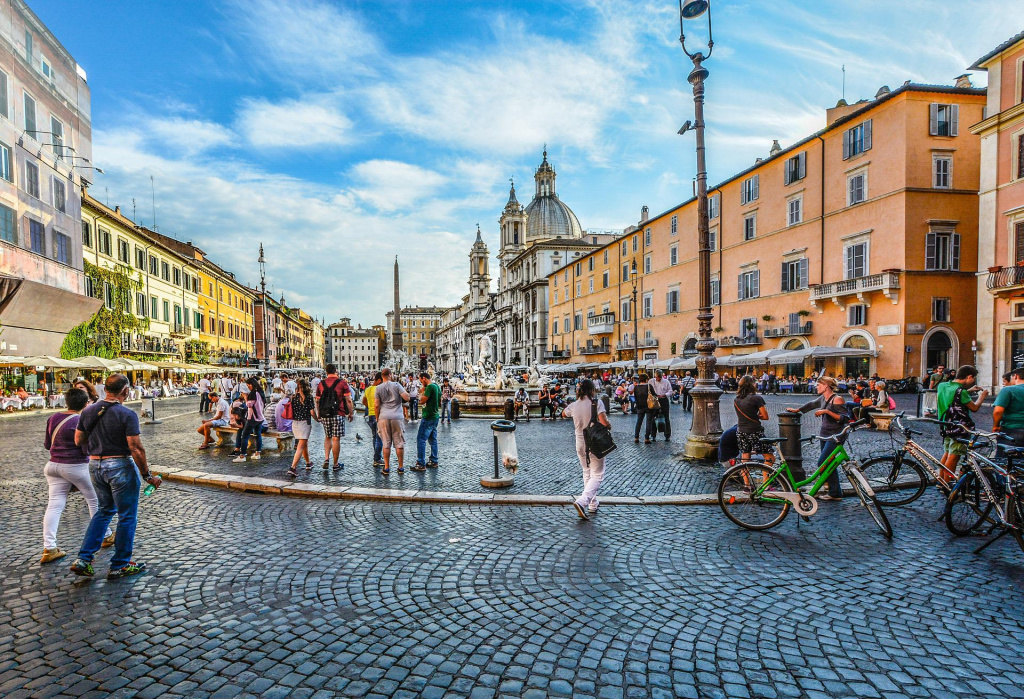
The city square is the center of modern Rome. It's a place where friendly groups of people hang out. In the daytime, there are market stalls, and at night, you can see empty bottles everywhere. Many restaurants and cafes serve authentic Italian food.
Everyday life in the city is shadowed by the monument to Giordano Bruno.
This oval square in the middle of the city was the site of athletic competitions, fairs, city celebrations, and religious processions in antiquity. Today it has the Four Rivers Fountain, the Neptune Fountain, the Moor Fountain, St. Agnes Church, the Basque Palace, and the Pamphili Palace.
In Christmas time, there is a fair where you can buy a lot of interesting Italian goods and handicrafts from local craftsmen. Locals say this square is the sunniest in town.
Temple of all gods, built in the II century BC, originally served as a shrine to pagan gods. The Pantheon was a pagan temple until it was converted into a Christian church in the seventh century. The 42-meter-high rotunda was topped by a 45-meter-diameter dome with a 9-meter hole in the center.
There are 16 columns in the circular interior, and the walls and altar are covered in Renaissance frescoes. A hole in the dome called Pantheon Eye lets light in, and its rays move between statues during the day. In addition to the tomb of Raphael, some Italian kings were buried in this unusually engineered and architecturally unique sanctuary.
Tip: The temple is free to enter. Anyone can come to a service on weekends. Tourists will be pleased to know that they can take pictures in front of the royal tombs and Raphael's tombstone.
Nearly 20 meters long is the bowl of the largest Roman fountain. It's actually part of the facade of Palazzo Poli. The name comes from an Italian phrase that means "three streets". And the fountain is right at the intersection of those three streets.
In the XVIII century, architects, engineers, sculptors, and artists made antique stories, statues of gods and goddesses, and sculptures of mythical creatures. There's a legend that says you can find wealth, health, and a soul mate if you throw coins at the feet of the gods.
Tip: This famous fountain isn't just on postcards. The romantic scenes in Fellini's "Sweet Life" were filmed here, as was the meeting of the main characters in "The Taming of the Shrew".
This beautiful palazzo was built by three talented architects commissioned by the Roman patron of the arts Barberini. But that was after Barberini was Pope Urban VIII.
Nowadays, the palace houses the National Gallery of Art, with works like frescoes by the genius Pietro da Cortona, the Portland Vase, and the Palestinian mosaic.
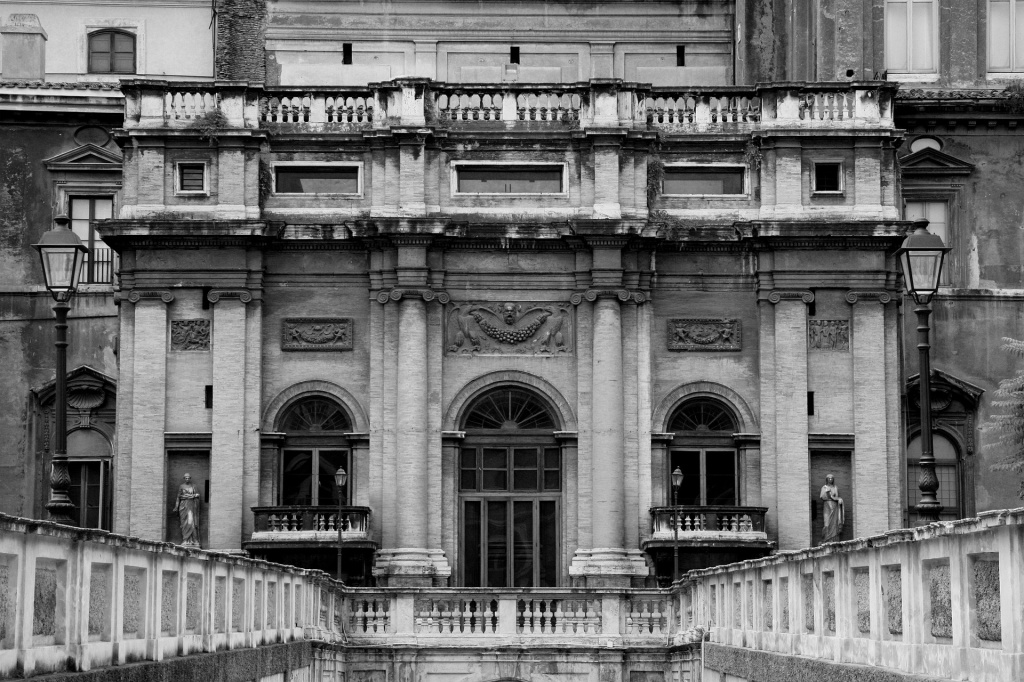
Behind the homonymous staircase, the basilica of the Trinità dei Monti rises above Piazza Espagnola. A memorial to the French invasion of Naples was built by Louis XII, king of France, at the beginning of the 16th century. Following Napoleon's invasion, the church was also restored at the expense of the French – funds for the restoration were provided personally by Louis XVIII. To this day, France is responsible for the building itself and the surrounding area.
Tip: In the church, look for the fresco from 1844 in a niche near the cloister. The mural depicts the Virgin Mary and was painted by a French girl.
There were vineyards on this land before the XVII century. Then, by order of Cardinal Borghese, a park was laid out and a palace was built in the middle. There was genuine admiration from visitors about the medieval-style interior decoration of the building.
Today you can visit the Borghese Gallery and admire masterpieces of sculpture and painting by Raphael, Rubens, and Van Gogh. And there's a zoological museum, zoo, and botanical garden.
Tip: The park is open 24/7, but every museum has its own schedule.
The famous Italian family's house is an antiquity museum. There are tapestries, antique furniture, valuable documents, engravings, and a lot more. Almost every day, concerts, exhibitions and other cultural events are held here thanks to the Academy of Art.
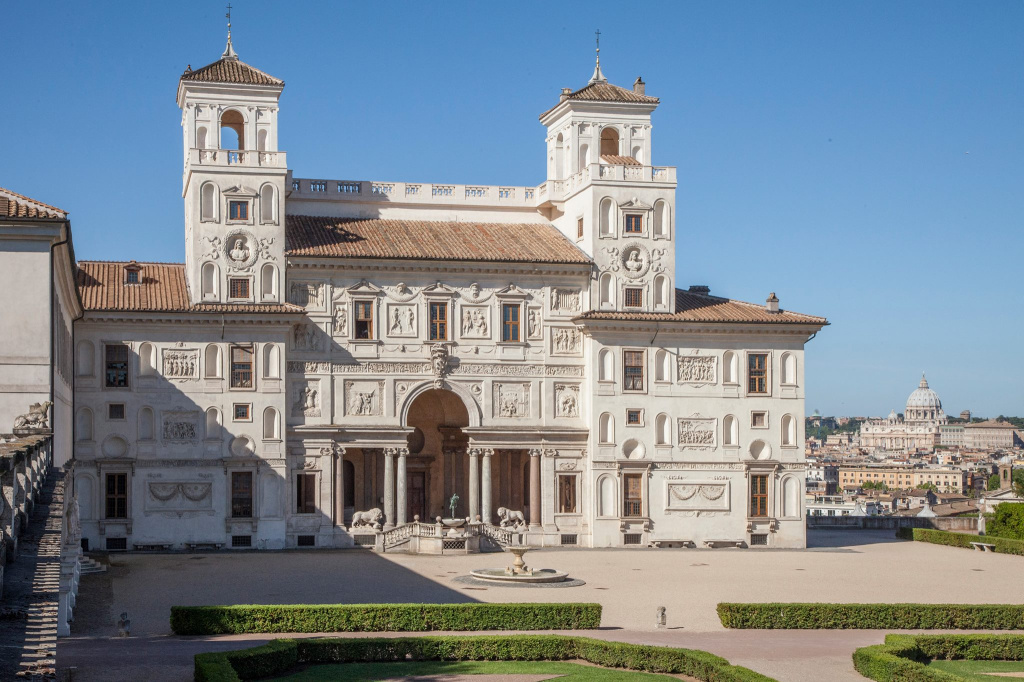
Photo: villamedici.it
Italians call this square People's Square. From the square, three broad streets diverge in different directions, serving as key transport arteries. A 24-meter stele stands in the middle. It's from Egypt. The stele is more than 3.5 thousand years old. The fountains of Neptune, the Goddess of Rome, and the bowls with lion figures are shown here.
The square has no traffic, in the evenings young people gather here, organize concerts, and sometimes have big parties.
Visit the St. Peter's Cathedral, the Holy See of the Papal Court, the Sistine Chapel, the Pinacoteca with works by Titian, da Vinci, Raphael, Caravaggio, and the History and Etruscan Museums to experience this "State within a State".
Only 800 people live in the smallest state in the world, and almost all of them work for churches. The Vatican is where the Pope lives. There's no other city with as many treasures and relics. Just think about the size of the Vatican, which is only 450 square meters.
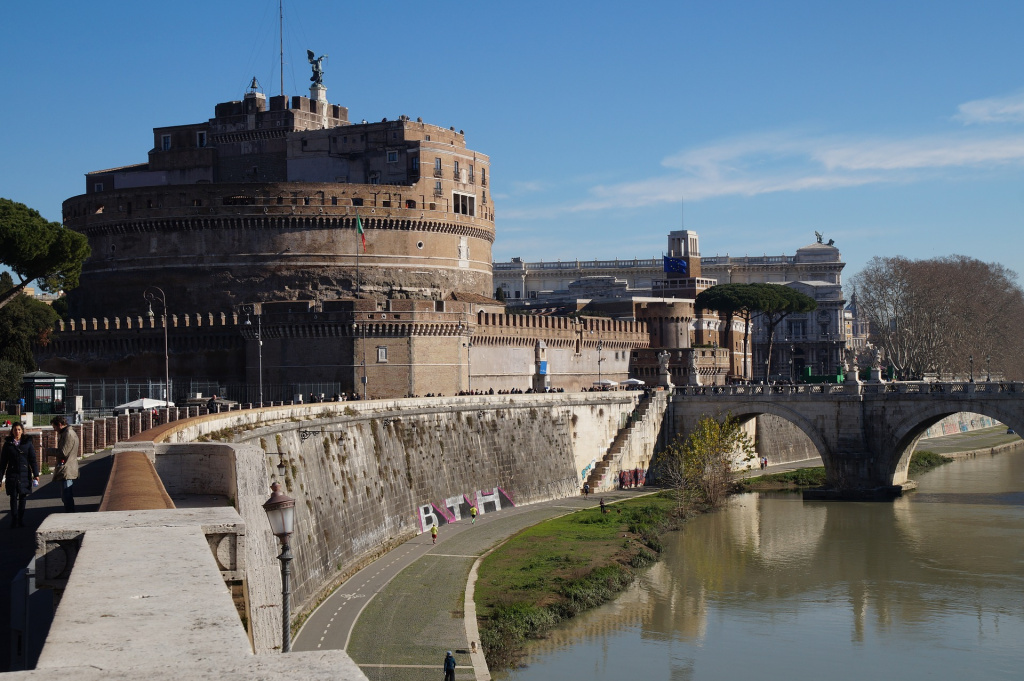
Rome's most mysterious castle. Called the Sad Castle because of its tragic past. As a mausoleum, fortress, prison, treasury, and even papal residence, it has served many purposes since it was built in the 2nd century AD.
In the VI century, the castle received its name. Someone saw an angel on the roof of the castle during a terrible plague epidemic. People thought it was a good omen. In the same year, the disease started to wane and soon left the city.
Tip: On the first Sunday of every month, you can visit the castle for free.
Trastevere is on the right bank of the Tiber, so the name comes from the Etruscans. This is a totally non-touristy capital of Italy. Weird narrow streets with terracotta houses, ivy-covered walls, tiled roofs, motor scooters, dogs on the street, and laundry hanging out to dry – that's what gives the city an almost medieval feel. Churches, restaurants, taverns, and museums are there too. There's even a small tobacco factory.
The size and monumentality of this structure make it look like a fortress. It was built in the III century AD. Massive stone and marble blocks were used here. The Roman nobility preferred to visit Caracalla's thermae.
When the Roman Empire fell, the baths were destroyed. They were rebuilt in the 16th century. It's now a historical monument, where during the summer the Roman Opera House takes over. There are ballets, operas, and pop concerts there.
Hierarchically, this basilica is even more important than St. Peter's Cathedral. Bas-reliefs on its facade proclaim San Giovanni in Laterano as the mother of all churches.
It was built by Constantine in the 4th century BC. These relics of Saint Peter and Saint Paul can be found in this church as well as the "Holy Stairs". According to legend, that's where Jesus climbed on his way to Pontius Pilate's trial.
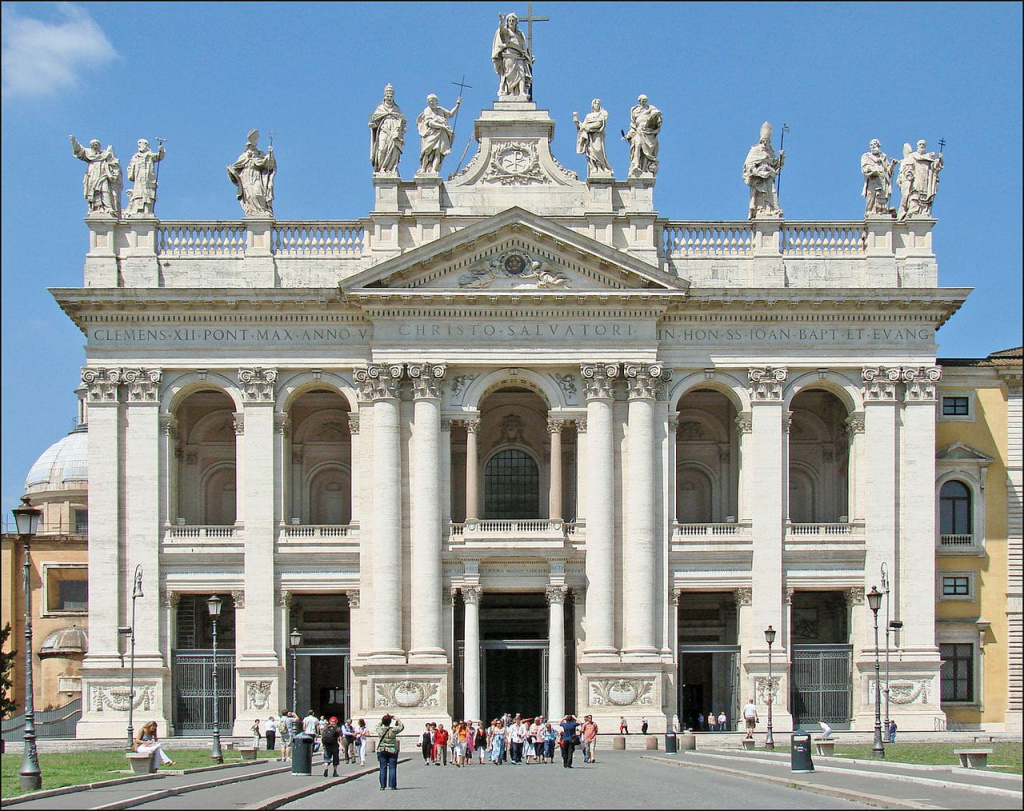
Photo: wondermondo.com
The basilica was built in honor of the Apostle Paul, who was executed in 67 AD after severe torture. An apostle's tomb is next to the temple, complete with a memorial stele. There's a sculpture of Paul with a sword and a book out in the courtyard. UNESCO has declared the temple a world heritage site.
Visitors and residents of Rome flock to the temple in search of Christ's forgiveness in a ceremony known as "Holy Door".
Tip: The church is free to enter every day.
Legends surround this majestic hill. Criminals used to be thrown off Tarlay Rock, which is now just a gentle slope. The ancient temple of Juno stands on the site of the Basilica of Santa Maria in Aracelli, the oldest building. Legend says that the geese that saved the city from the Gauls lived here.
Here are the world's oldest museums. Starting with five bronze sculptures by Pope Sixtus IV, the collection of works of art grew and grew. In the senatorial, conservatory, and new palace, it's one of the biggest museums in the world. They have a statue of the Capitol She-wolf. It's the same one that, according to legend, nurtured the babies Romulus and Remus, who later founded the Eternal City. There's also the Statue of Hercules and the Egyptian lions, the bust of Brutus and the Venus of the Capitol, and more masterpieces.
Tip: Capitol Hill museums are closed on Mondays.
The staircase looks like a butterfly when viewed from above, and is considered the most original staircase in Europe. The Spanish Steps were built by Italian craftsmen to placate the French (the French embassy on Pincio hill was there at the time). They're now a favorite spot for lovers. Here, newlyweds attend concerts and flower exhibitions. The most fashionable shows happen here. After climbing 138 steps, you are rewarded with a stunning view of the city.
Some movies were filmed on the Spanish Steps, like "Roman Holiday" and "The Talented Mr. Ripley."
Tip: There are always a lot of traders and groomsmen cheaters here. Be careful. It's better not to sit on the ancient steps – not so long ago you could get fined for such sit-ups.
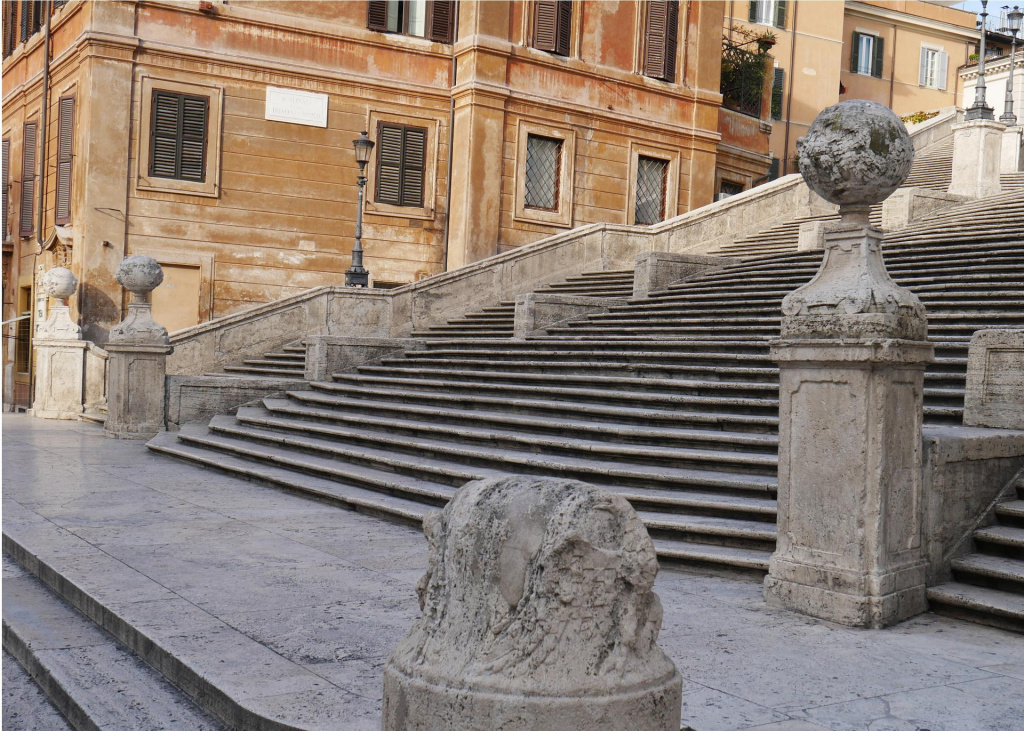
Spain's Embassy is located on one of the most famous piazzas in Italy since the 17th century. To the south of the square is the Immaculate Conception column and the Spanish Palace, to the north are the Spanish Steps. It's one of those places you can get to by vehicle.
In the square there are a lot of fashion stores for shoes and accessories.
Piazza Navona's fountain of the Four Rivers was created by Giovanni Lorenzo Bernini. Bernini wasn't allowed to bid for the fountain at first because he was in a dispute with the bell towers of St. Peter's Cathedral. Despite his innocence, Bernini's reputation was damaged.
Bernini still made the model, and his patron took it to Innocent X's dining room. The pope was so impressed with the one-and-a-half-meter-high silver model, he cancelled the competition in favor of Lorenzo. Another version says the master was interceded for by the wife of the Pope's brother. Whatever the case, Bernini was the guy who made the world-famous fountain.
Here are a bunch of artists, musicians, and other creative types. The Christmas fair is always crowded and noisy.
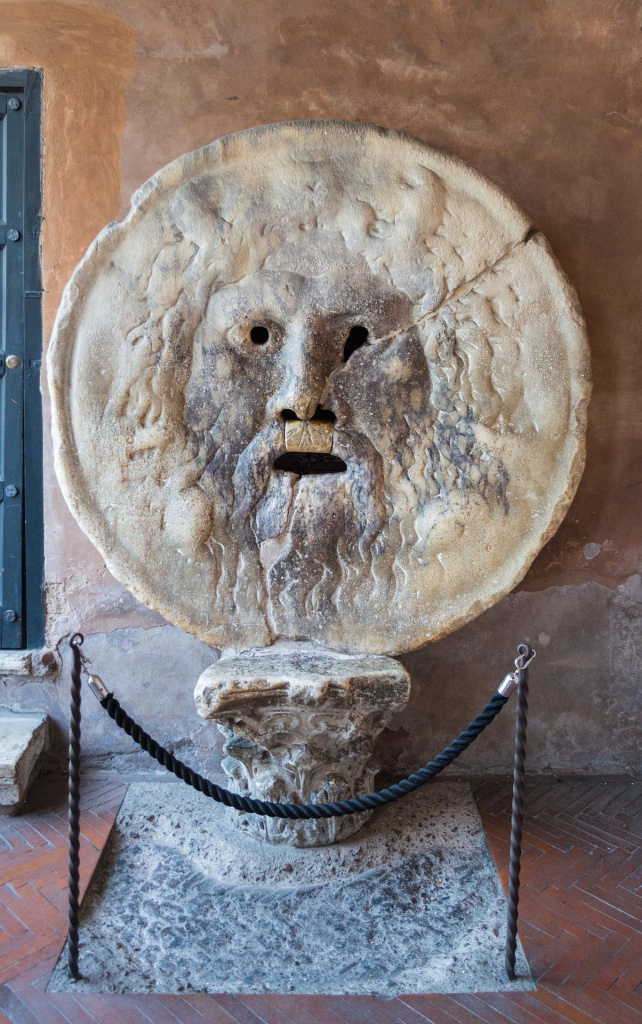
In the temple of Santa Maria in Cosmedin, tourists are greeted by an open-mouth Triton mask (some sources claim it is a mask of some pagan idol or oracle). Here's the world famous "Mouth of Truth". There are a bunch of legends about this mystical artifact, whose age is estimated at 2200 years old. As a lie detector, the cape will bite off the hand of a dishonest man or unfaithful wife, according to one of them. It didn't and doesn't affect the number of tourists who go to the "Orms of Truth" for answers to their questions. Of course, no one has ever actually been bit by a fleece.
Many times the mask has flashed on screen, in movies like "Roman Holiday," "Only You," "Night Wings," and "The Slipping Bride." And prediction machines use the image as advertising.
There used to be a hippodrome here, built by Caesar, Nero, Trajan, and Constantine the Great. It's more like an oval clearing today, surrounded by ruins of race tracks, grandstands and marble carcasses.
The road once linked the capital of Italy with countries in Asia, as well as with Greece and Egypt. Construction of the road started in the 4th century BC. It was associated with Appius, one of the nobility of Rome. While the road used to start outside the city, now it's right in the middle.
312 BC was when the Appian Way was built. In the beginning, it was a military route, but later merchant caravans, pilgrims, and travelers started using it. There are ruins of palaces, catacombs, columbaria, and citadels on this road, which has been designated an «archaeological monument».