$ (USD)
English


Portugal's capital, Lisbon, is the heart of the country. Originally, the area was a Roman camp that grew into a city. The city's first name translates to "Happy Julia" in Russian. The name is a reference to Julius Caesar. The second name is Ulisea, but the etymology has been lost over the centuries.
Throughout the Middle Ages, the city belonged to the Muslims, and we can still see the East's influence in the architecture. Lisbon had already been conquered by the Crusaders by the 12th century. During the four centuries, there was a lot of development and a "golden age," which lasted for about two centuries. Lisbon was hit by a natural disaster in the XVIII century. Much of the city was destroyed by earthquakes and fires.
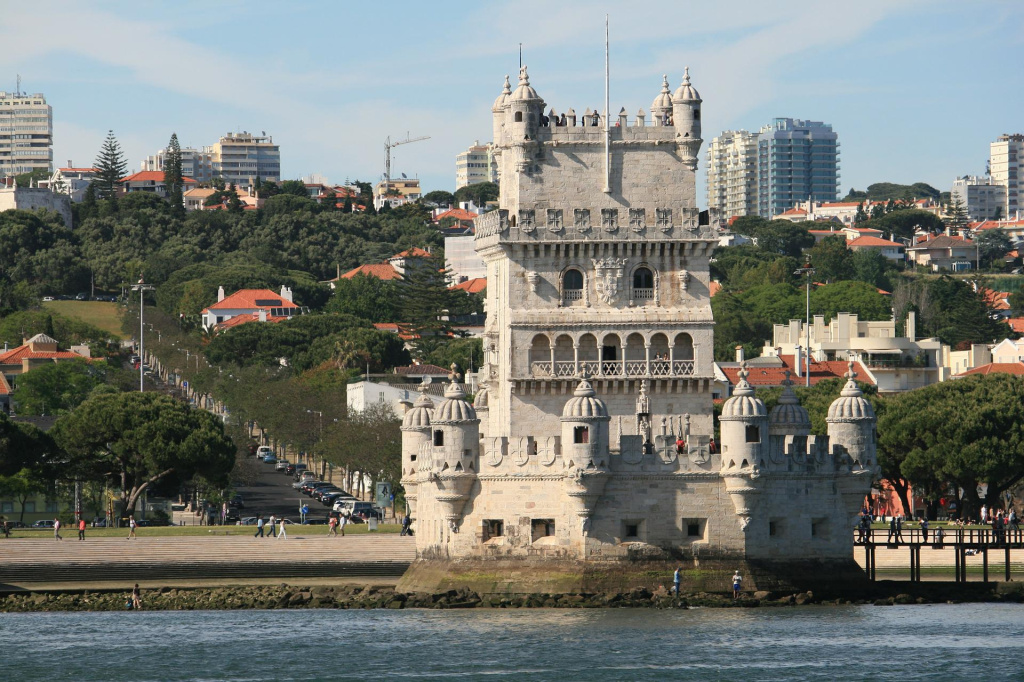
#RELEVANT_TOURS#Lisbon's tower has long been a symbol of the city. This was part of a defense complex in the 15th century. There were several successive rulers who tried to build a tower to defend a position on the Tagus River. It was completed in the 16th century.
Check out the statue of the rhinoceros when you visit the tower. You can find it on one of the outer walls. The gift was given by an Indian sultan to the Portuguese king.
In 2007, the Jerónimos Monastery was voted one of Portugal's Seven Wonders. A magnificent monument of Gothic architecture, especially in Manueline style. Spend a long time looking at the inside of the monastery, catching new details each time.
There are two museums in Jerónimos: the Archaeological Museum and the Maritime Museum. The monastery is also an important religious center, and it still serves its original purpose.
You can compare the castle of Saint George to the Kremlin. The castle has been there for a long time. It's an old Roman fortress. According to history, the Portuguese took over the land in the XII century.
Interesting thing is that you can see the castle from just about anywhere in the city. The castle is surrounded by a moat, over which a bridge was thrown. You can walk across it to get to the massive gate, which hides the inner fortress.
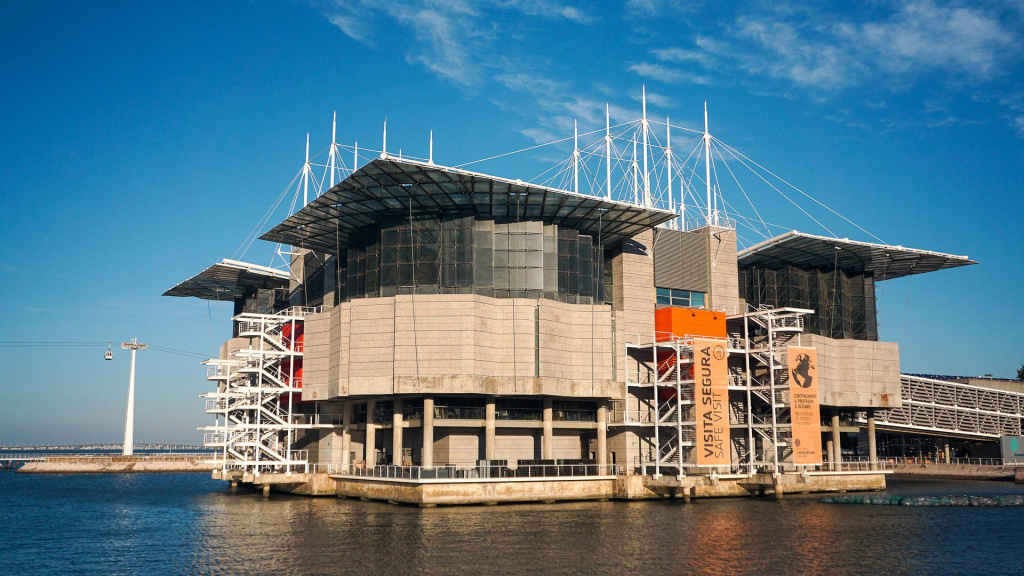
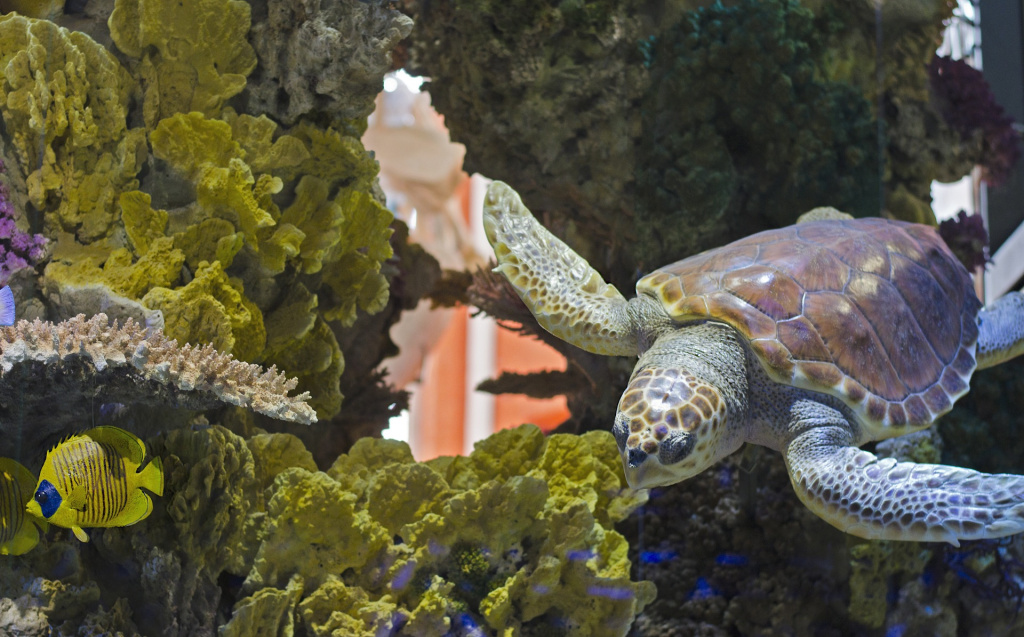
The Aquarium opened at the end of the 20th century. There are lots of cool events there now, from scientific lectures to weird services. There are also the usual guided tours for groups of all sizes.
In one of the oceanarium halls, sharks are kept, parents and kids can sleepover. Animators often participate in magical performances for kids under three. There are also themed excursions for the elderly.
Carmo Convent was built by national hero, monk Pereira, whose sister owned these lands originally. A small church stood there until the end of the fourteenth century, when a Gothic monastery was built on its site.
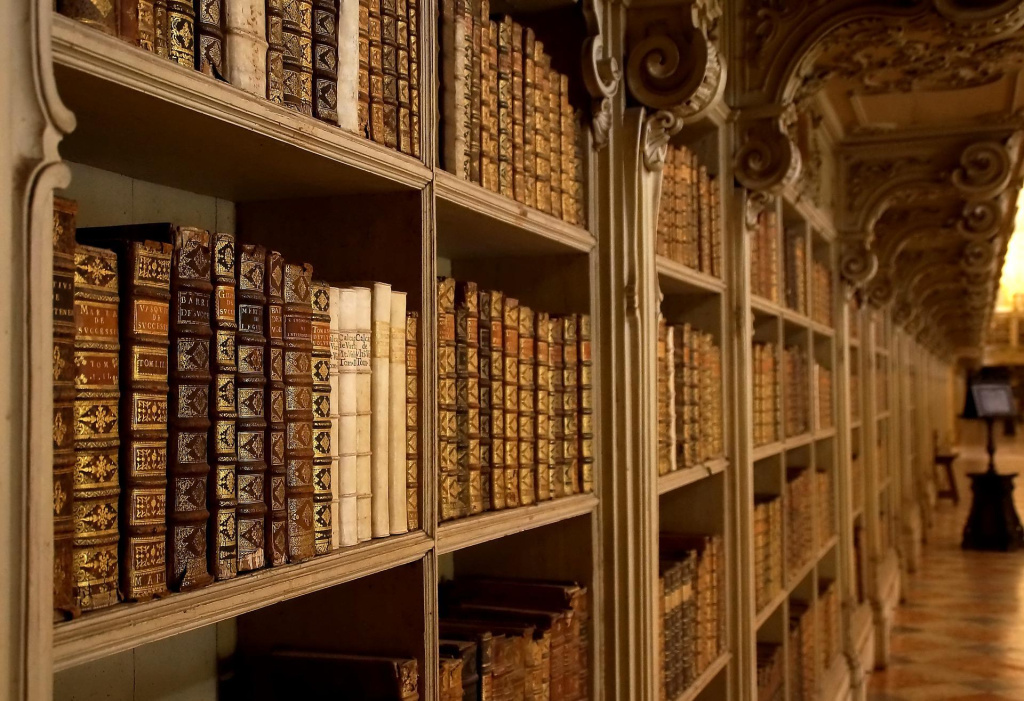
During the XVIII century, the monastery was badly damaged by a natural disaster. There were hardly any buildings left, and the library, which had more than five thousand copies, was destroyed. Sightseeing tours tell you about the area's rich history now.
Located in the heart of Lisbon, the Baixa neighborhood stretches from Liberty Avenue to the waterfront. The neighborhood is especially interesting because of its architecture. The buildings are built to withstand earthquakes. Stores and cafes occupy the first floor, and the rest is residential.
The first of its kind, it has become a standard for cities in Europe. Lisbon has a lot of historical and cultural monuments around here. Spend a few days exploring!
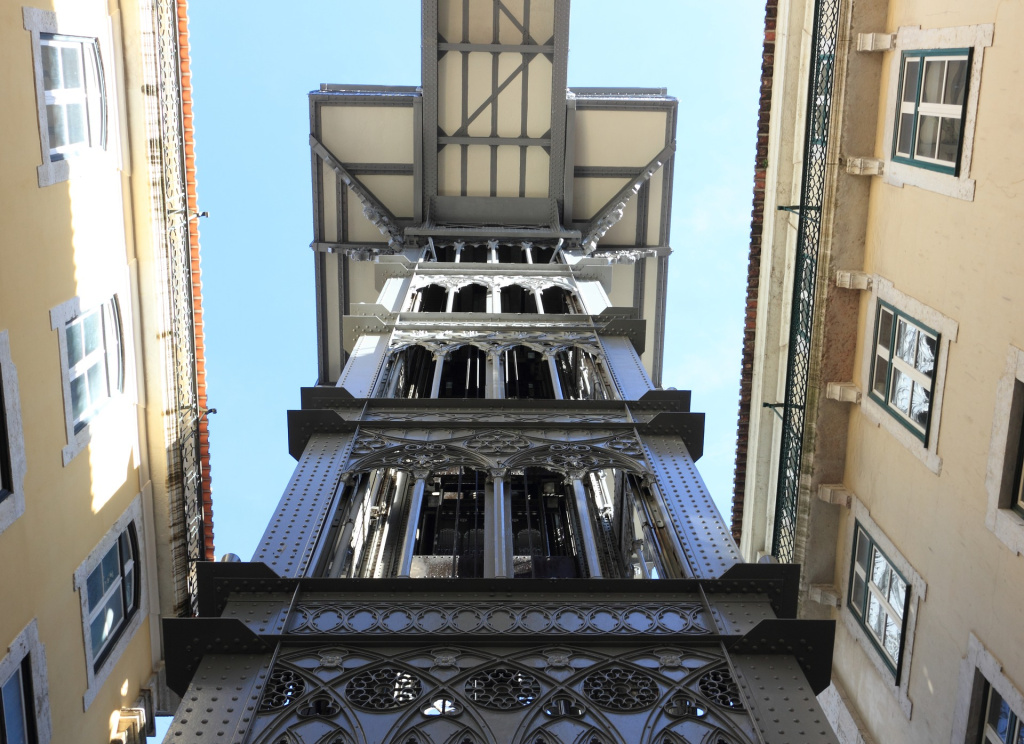
Construction on the elevator tower began at the end of the 19th century and was finished in the early 20th century. The elevator wasn't powered by electricity at first, but by steam traction. That system was replaced pretty quickly by a more modern one.
The first observation deck is located 30 meters above the ground, and a bridge connects it to Largo do Carmo. The tower is 45 meters tall.
In the 4th century, there was a Roman temple which was later converted into a mosque, and by the 12th century, it was a Christian temple following reconstruction. There are elements of Gothic, Baroque, Romanesque and Neoclassical in the architecture.
Though it has survived many earthquakes, the cathedral is still in great shape. The inside looks like a classical Christian basilica. It has an archeological museum inside.
Ajuda Palace is interesting because it seems unremarkable, but inside it's beautiful. The rich decoration is striking: ancient statues, exotic statues and tapestries, first-class handcrafted furniture, and lovely wall art.
The building of the palace started in the 18th century and was finished in 2021. There are only two floors open to tourists right now: the basement and the knight's room.
One of the oldest museums in the city is the Maritime Museum. The collection began collecting a century before the museum opened in the mid-19th century. You'll find both permanent and temporary exhibits at the museum.
Many of the exhibits are about the country's geographical discoveries. You'll see statues of the great Portuguese discoverers in the first room. The figure of Enrique the Navigator takes the center stage.
A museum dedicated to Asian culture opened in Lisbon at the beginning of the 21st century. There's stuff from all periods of American history at the museum. One of the exhibitions is completely devoted to Portugal's Asian period. Another exposition showcases exhibits exclusively donated by the Parisian museum.
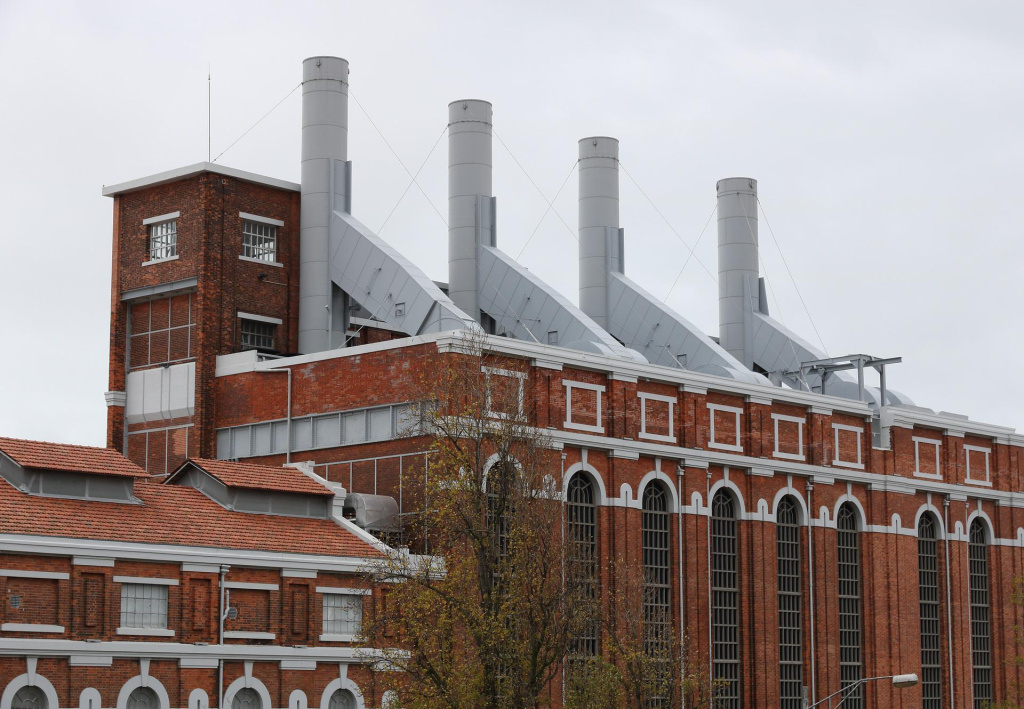
The building that houses the museum used to be an industrial complex. In order to keep the contrast between the outside and inside of the museum, the exterior of the building wasn't changed.
The 19th-century building is called São Pedro de Alcântara. Nowadays, it's a popular spot to look out over the city. From here you can see the city panorama: multi-storey buildings with white facades, red brick roofs and the blue Tagus.
Mafra Palace was built in the Baroque style and is one of Lisbon's most beautiful palaces. It just so happens that its construction was initiated by one of the wealthiest kings in the country who at the time was also the richest ruler in all of Europe.
The palace was built with a lot of the king's money. It was dedicated to his heirs. The territory of Mafra is over four hectares. Originally, the palace was a small palace, but over time another palace building and basilica were added.
In the 17th century, Fronteira Palace was built as a hunting house. During the Portuguese War of Independence, he became famous, for which he earned a title. There was a golden age when the palace was built, an era of prosperity. The architecture of the building reflects the style of the 17th century in Portugal.
A collection of frescoes and paintings are found inside the palace, many of which depict the history of the country. A beautiful garden surrounds the building with statues of Portuguese kings. Interestingly, there isn't a single image of the three kings.
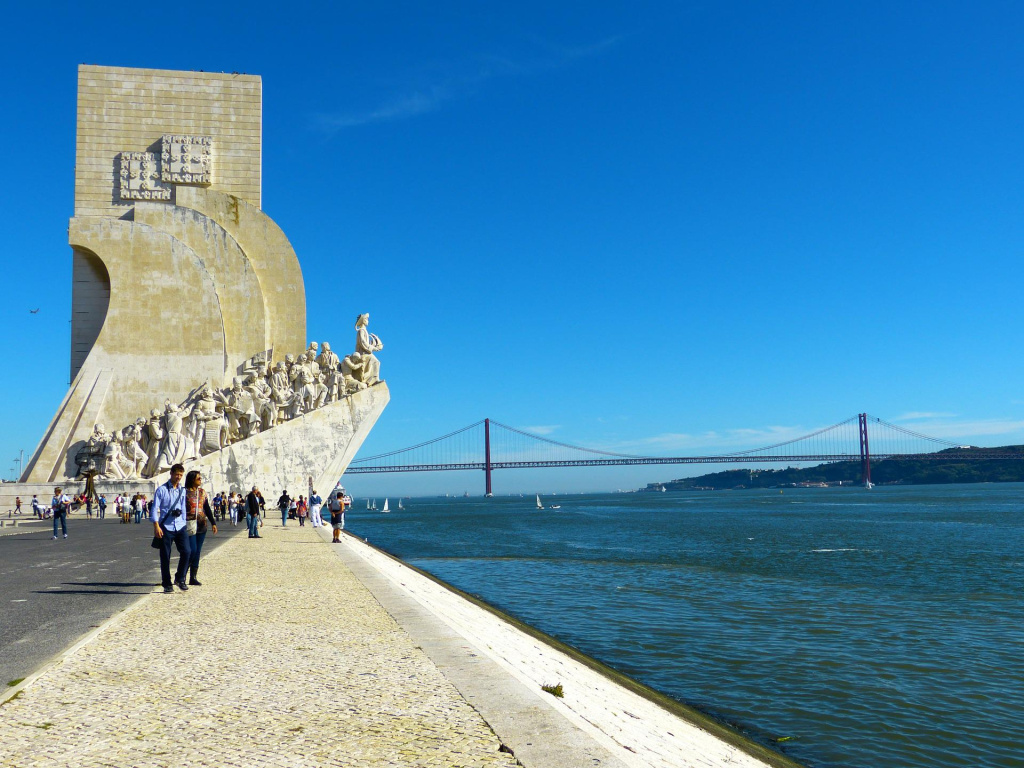
For Russian tourists, the monument is called the Monument of Geographical Discovery. It's about 50 meters high. A ship hovers over the Tagus River, and there are those who were the discoverers back then.
People's numbers are carefully detailed. There are 32 of them. It looks best at sunset, but for the same reason there are a lot of people around then.
It's one of the biggest parks in the city. It's got more than 25 hectares. There are several monuments, like Carlos Lopes, a pavilion built in the 20th century, a pond decorated with sculptures, and a bunch of greenhouses.
There are also a bunch of playgrounds for kids and adults. Additionally, there's a tennis club and a big sports field.
The Arc de Triomphe is near the Commerce Square. In the middle of the XVIII century, after a huge natural disaster, the city survived like a phoenix. During that time, the entire central part of the city was destroyed, and most of the buildings had to be rebuilt.
Four years after the catastrophe, the arch was finished. Today it's a popular tourist spot. There are always photographers waiting around here to take your picture against the monument.
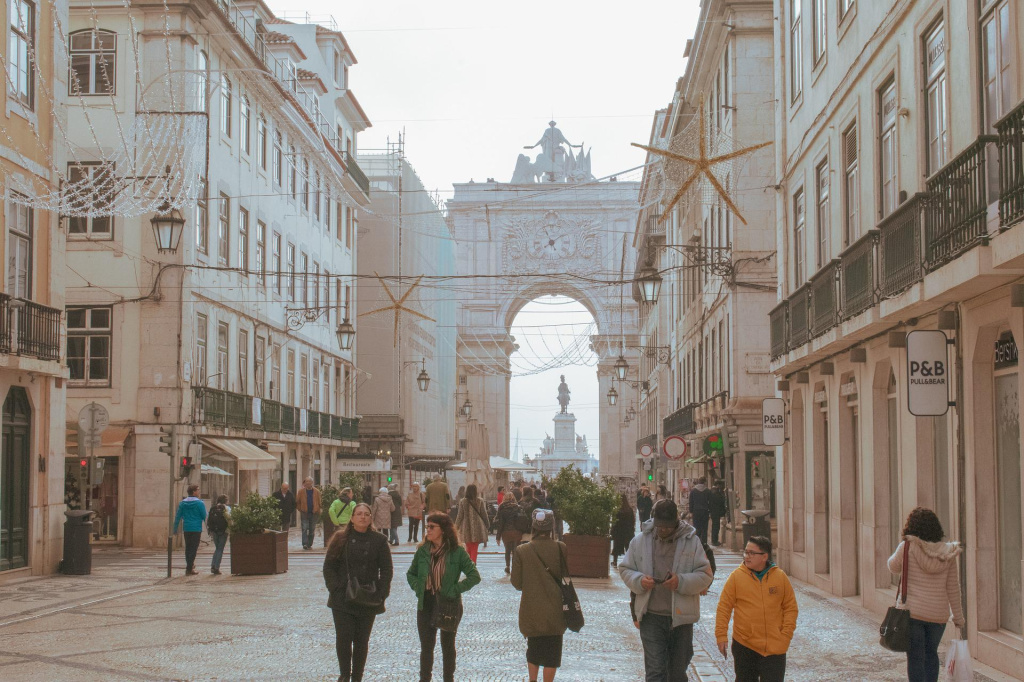
Augusta is the longest pedestrian zone in Lisbon. It's also where a lot of the city's businesses are. There are a lot of monuments of ancient architecture on this street, and the sidewalk is lined with mosaics.
There are a lot of tourists here at any time of day. Someone came for street performers, someone came for shopping, and someone came for his favorite cafe. There's also the famous Arc de Triomphe, which symbolizes the rebirth of the city after an earthquake that devastated the center.
In this unique museum, you can see examples of carriage construction from the 16th century to the 20th century. It's split up into two sections. First, there are Renaissance pieces, and then there are high-tech works.
The majority of the samples collected belonged to monarchs and nobles. Elegant carriages decorated with intricate sculptural designs are amazing! In addition to the museum, there's a restoration workshop and a library.
Until a terrible earthquake destroyed half the city in the middle of the 18th century, the square was home to the Ribeira, one of the most sumptuous palaces in Lisbon. It was decided to build a square after the earthquake. In the middle is a monument to King José I, who rebuilt much of the city in his time.
There are a bunch of animals in the zoo that live on land and in water. You can see everything from lemurs to harbor seals here. The zoo has a small dolphinarium where regular shows are held.
This zoo is special because the places where the animals live are close to nature. The cages are like islands of "wild nature", where animals feel comfortable.

The Belém Palace dates back to the 16th century. Once upon a time, this palace was a riding school for the Portuguese king. Today it's the presidential residence. Both the inside and outside of the palace are gorgeous. The Carriage Museum, one of the most famous museums, used to be the school.
The square is named after one of the emperors, Pedro. Today, it's the city's main square, where tens of thousands of tourists go every year. The square used to be the site of the Estaus, a palace that held the Inquisition for a while.
The square was almost completely destroyed during the earthquake of the 18th century. It was reconstructed throughout the century.
Lisbon's oldest and most beautiful quarter. Used to be full of therapeutic baths. Beautiful old-world atmosphere. It looks more like a little village that somehow made it in the middle of the big city.
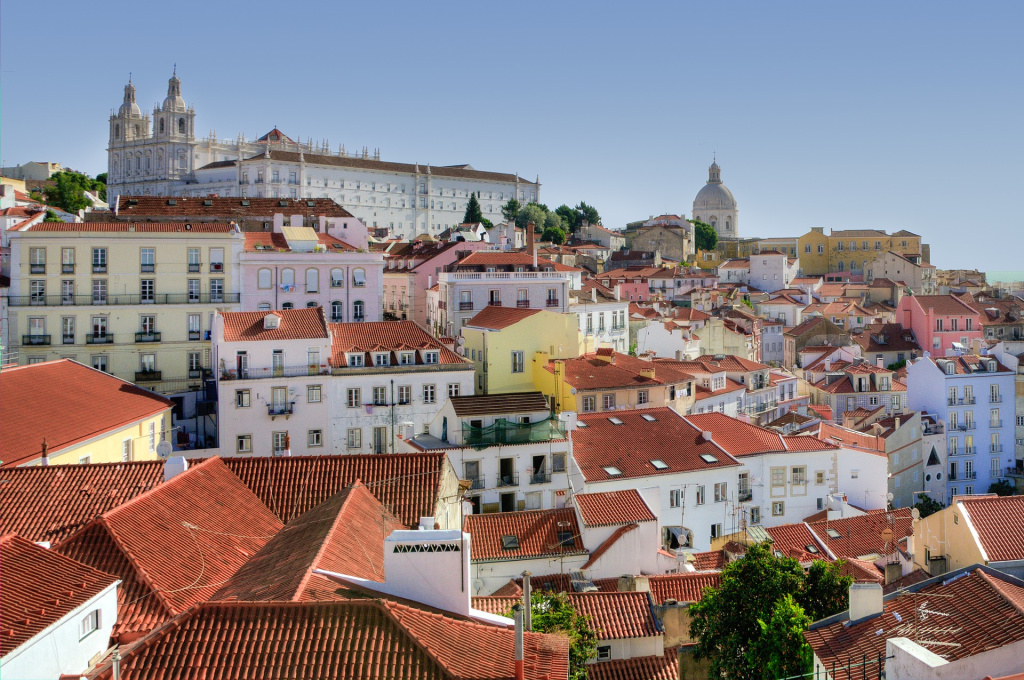
At least since the 12th century, this monastery has existed. Obviously, this is the period when the monastery was mentioned for the first time. These walls have been home to the Archbishop of Lisbon for more than a century.
The Renaissance architectural elements are worth paying attention to. You can also see a good collection of art inside.
It's one of the oldest Jesuit churches in the world. The plague cemetery was here until the 16th century, when the dead were buried here during epidemics. Near the cemetery was built a church in honor of a saint who looked after sick people. There's a museum near the church where you can see sacred art.
Founded at the end of the twentieth century, the museum exhibits a wide range of art. After a while, it was closed for renovations, but since 2006, it's open again.
There are interactive exhibits at the museum, where you can play with the exhibits. These are special exhibits with specimens to examine. Separately, there's an exhibition with a bunch of electricity-generating devices.
Palaces are built for royal families, so they deserve to be luxurious. The project was conceived as a summer retreat in the 18th century. A fire gutted the palace, but despite all the difficulties, it still stands perfectly today.
The museum has a huge collection of exhibits, which makes it unique. Here you can find objects of world heritage, that used to be at the Hermitage. The creator of the collection, after whom the museum is named, started collecting art objects in the 20th century.
There are several sections of the museum: halls for antiques, exhibitions of European art, a library, and a separate gallery for masterpieces.
One of the buildings built by a royal family member to mark the birth of an heir is the Basilica. This one was built by Maria the First.
Around the same time, the city was badly affected by an earthquake, so construction of the basilica was delayed for a long time. Some of the best architects worked on it, and it turned out great! The dome of the basilica can be seen from pretty much anywhere in the city.