$ (USD)
English


Chukotka is not just the Far East and different time zones. A trip there is not a vacation, but a real expedition through the Russian North. Going to Chukotka, you must understand that it will not always be possible to see and do everything on the list. This region is a struggle, where everything is against you, but this is how the most exciting memories are created. The endless tundra, covered with snow or overgrown with bushes, herds of deer, rare northern lights, huge walruses and real polar bears — all this creates a picture of a different world that exists in isolation fr om everything else.
This region is set in the Far East and is washed by the waters of the Pacific and Arctic Oceans. The most eastern points of Russia are located there: Cape Dezhnev on the mainland and Ratmanov Island. Previously, there was a border patrol throughout the area, but since 2018 it operates only on Wrangel Island: to get there, you need to have an invitation fr om a local resident or a tour agent.

The climate of Chukotka is harsh: the average winter temperature is about -20 ° C, but sometimes it drops down to -40 ° C. Hurricane winds are not uncommon, as well as storms and fog. December and January are the time of a polar night when you can see the northern lights. In general, November and December, due to the changeable weather, are the least favorable months for a trip to Chukotka. The tourist season of "winter-spring Chukotka" begins in March and lasts until early May, and the peak of summer tourism is in July and August. The average temperature in summer is about + 5-10 ° C, but sometimes there are hot days with up to + 25 ° C. You can enjoy the polar day in May-August, which will give you a sense of endless wakefulness. Autumn in the tundra is beautiful, but the possibility of the region is greatly reduced during this time.

For an unforgettable experience of a trip to the wilderness. You won’t see a perfected touristy side of things here — the region is not spoiled with crowds of tourists, and local residents are ready to show their home country just as it really is. This is a paradise for photographers, lovers of abandoned villages, fishermen and animal enthusiasts. Since the region covers over 700 000 sq km, it is crucial to understand clearly wh ere you need to go to see what you want to see.
The territory of the region is divided into 4 regions: Eastern, Southern, Central and Northern, and sometimes the capital — Anadyr — is counted as a separate region. You don't need to go too far: even around the capital, you can see polar bears, elk and bighorn sheep. There are also abandoned villages and places wh ere you can go fishing, so it is the place for you if you want a budget trip to Chukotka, just for a few days.
Eastern Chukotka is the most touristy Chukotka. It has bizarre fjords of Provideniya Bay, where you can watch walruses and whales, as well as a monument to the 180th meridian that separates the Western and Eastern hemispheres. You can even get there by boat. People go to the East of the region to enjoy hot springs, see Cape Dezhnev and visit ethnic villages.
In the central part, in the Bilibinsky region, there is the only volcano in Chukotka — Anyuisky, which went extinct in the 16th century. Chukotka is not Kamchatka, so you won't see large volcanic chains here, but fans of outdoor activities will appreciate it.
Northern Chukotka is, of course, the city of Pevek and Wrangel Island. If Pevek is notable mainly for its houses on stilts and the great will of the townspeople to live in true Northern conditions, then the beauty of the reserve on Wrangel Island is obvious: walruses and musk oxen live here and white geese nest, but most importantly, this island is home for polar bears and their cubs.
Southern Chukotka is famous for the most stormy point in Russia, Cape Navarin. Nearby you can find the Bay of Gabriel, in which the first meteorological station of the same name was once located. The station was abandoned in the 2000s, and now all that remains of it is its building and rusty rails, generators and strange iron blocks here and there. It seems that these are the remnants of another civilization, as distant as the Kereks — a tribe that lived on these shores when Vitus Bering came here. Sadly, they disappeared some half a century ago.


We’ve already mentioned some places that are worthy of attention, but do not forget that Chukotka is about emotions and experiences. Therefore, get ready to soak up the atmosphere of the place, and for this:
Whales were sacred animals for the Eskimos, so even a whole whale alley was erected on the island of Yttyngan — parts of the skeletons dug into the ground form a half-kilometer sanctuary. You can see live bowhead and gray whales on a tour around Sinyavinskaya Bay.

Chukotka is home to many indigenous tribes, and the Eskimos are the second most famous after the Chukchi. Cape Dezhnev is worth a visit not only because of its geographical location, but also because the Eskimo settlement of Naukan of the 11th-12th centuries is located there, as well as the Ekven burial ground that is over two thousand years old. In the neighboring village of Uelene, you can meet modern Eskimo people and ask them about their life and history.
The Gudym underground base was built in the late 1950s: nuclear weapons were stored here during the Cold War. Now it is a huge abandoned place, and you can even drive through its tunnels. You can feel its frightening power and the atmosphere of desolation — if you love these kinds of places, do not miss it.

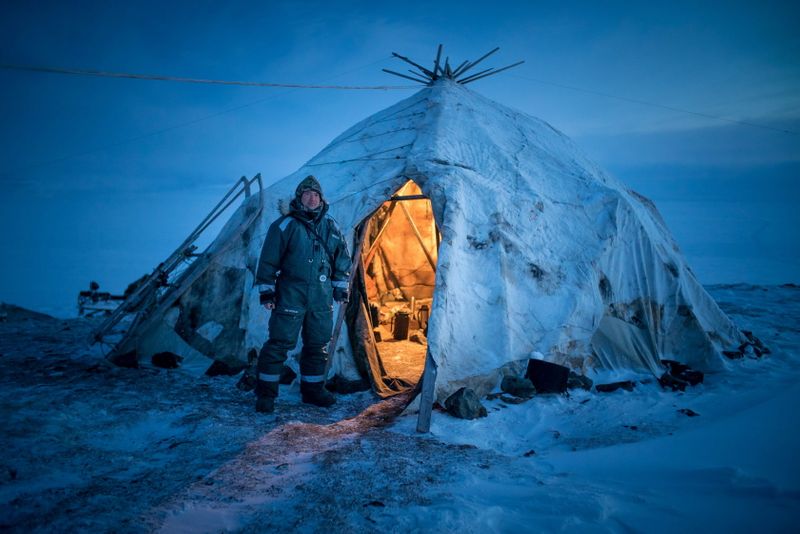
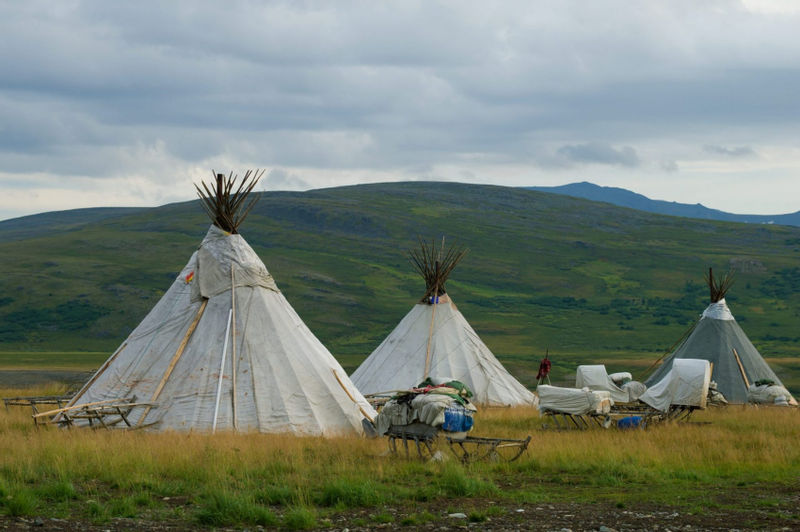
Chukchi is the largest indigenous community of the region. Reindeer breeders had to roam the tundra a lot in search of new pastures, collecting and dismantling their unique dwellings — yarangas. They bred deer for meat and warm skins — this animal helped people to survive. It seems that it was infinitely long ago, but even now in Chukotka you can come to the camp of reindeer herders, who still lead the same nomadic lifestyle. Come closer to the herd and treat the deer with salt, they weirdly love it.

Fishing for big pike, nelma or char is an interesting experience, especially for those who like fishing. And you can later cook your catch. In winter you can go ice fishing for smelt and grayling.

They say Chukotka, with its seeming simplicity, wins over people’s hearts. So if you are prepared for it and are full of enthusiasm to explore Chukotka, take a look at our tours — with great guides you can overcome everything.
